The 16th Commonwealth Regional Conference of Heads of Anti-Corruption Agencies in Africa has set out a shared vision for using artificial intelligence and emerging technologies to strengthen the fight against corruption across the continent.
The conference was held in Yaoundé, Cameroon, from May 4 to 8, bringing together senior anti-corruption leaders, policymakers and international experts to exchange experiences and develop practical, technology-enabled responses to corruption. The event was hosted by the Government of Cameroon in partnership with the Commonwealth Secretariat.
Held under the theme “Deploying Artificial Intelligence in the Fight Against Corruption in Commonwealth Africa,” the sessions explored how AI-driven tools can support investigations, enhance data analysis, improve risk detection and strengthen public sector oversight. National case studies from across the continent examined the ethical considerations and safeguards required to ensure the responsible and effective use of the technology.
In opening remarks, Roger Koranteng, acting senior director of the Governance and Peace Directorate and head of public sector governance at the Commonwealth Secretariat, said the moment requires both ambition and caution. “We meet at a moment when technology is reshaping governance, accountability, and the very architecture of public service. Artificial Intelligence offers new tools, new insights, and new opportunities but only if we harness it with integrity, wisdom, and purpose,” he said. “Our comparative advantage as the Commonwealth lies in our ability to bring nations together in the fight against corruption, and to exchange experiences and identify ‘best fit’ solutions tailored to local realities remains.”
Delegates emphasized that corruption continues to undermine development and public trust across Africa, reinforcing the need for strong institutions, political leadership and regional cooperation. Supporting member countries to tackle corruption is a core pillar of the Commonwealth’s mission, as reaffirmed at the 2015 Commonwealth Heads of Government Meeting. Since 2011, the Commonwealth Secretariat and the Commonwealth Africa Anti-Corruption Centre in Botswana have trained more than 7,000 officials across all 21 African member countries.
Massi Gams, head of Cameroon’s National Anti-Corruption Commission, said the scale of the challenge requires coordinated and sustained action. “Corruption and similar offences continue to wreak havoc in our society. In 2024 alone, the Commission received 10,520 reports. The financial loss suffered by the State of Cameroon as a result of corrupt practices was estimated at 4,061,806,711 CFA francs,” he said. “Cameroon has high expectations for this Conference being held on its soil. We hope the outcome will be innovative and practical solutions to enhance our capacity to fight corruption, thereby ensuring our country’s development and the well-being of our people.”
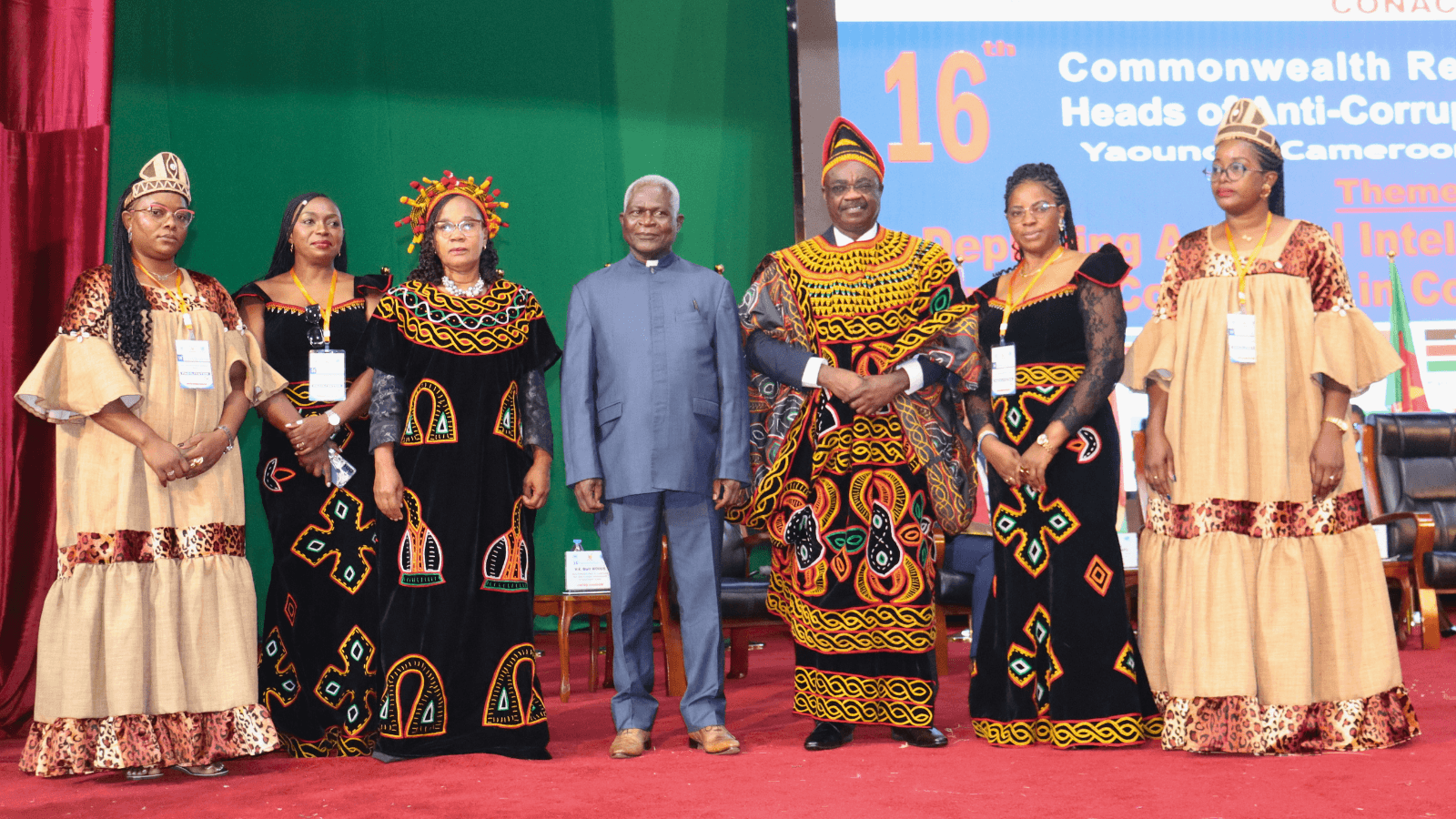
Koranteng was honored at the conference for his outstanding contributions to the fight against corruption across the Commonwealth, receiving the Toghu — the traditional attire of Cameroon’s Northwest Region — in recognition of his commitment.
The conference concluded with agreement on practical recommendations to strengthen institutional capacity, deepen cooperation and guide the integration of technology into national anti-corruption strategies. With Commonwealth Heads of Government set to meet later this year, the conversations in Yaoundé are intended to provide timely African perspectives to inform broader Commonwealth discussions on governance reform and support progress toward Sustainable Development Goal 16 on peace, justice and strong institutions.