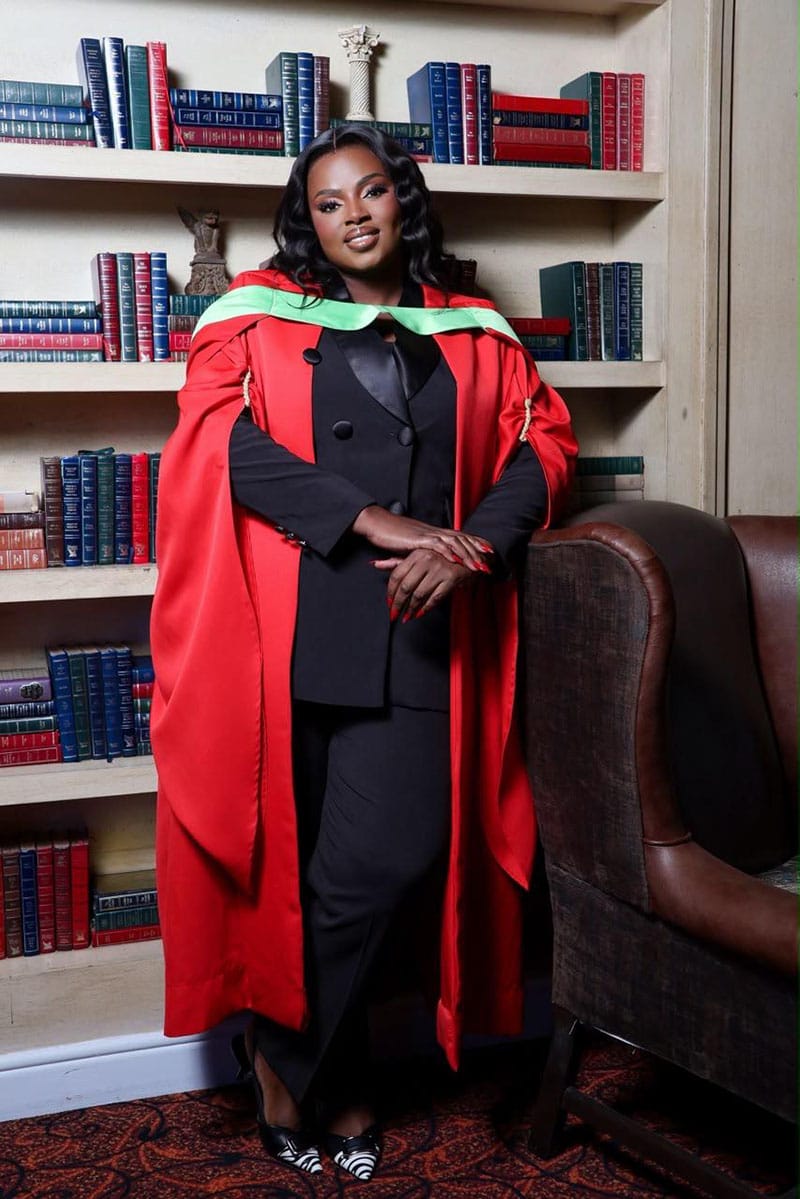
A North-West University PhD study by Dr Seani Rananga has developed a multilingual AI framework capable of detecting misinformation across English, isiZulu and Sepedi — extending a capability that has largely worked only in English into two of South Africa’s most widely spoken indigenous languages, and setting a template that can be adapted for elections, public emergencies and other high-risk events.
The research addresses a gap that has begun to surface repeatedly across South African AI coverage. False information travels through multiple South African languages simultaneously, but the systems designed to catch and label it — from platform moderation tools to fact-checking pipelines — typically only see the English fraction of that traffic well. That leaves speakers of indigenous languages structurally disadvantaged in identifying manipulated content, with the same failure mode that iAfrica has documented across AI transcription tools, voice AI systems, and legal-services AI: models built primarily on English underperform sharply on isiZulu, Sepedi and other low-resource African languages.
“South Africa is one of the most linguistically diverse countries in the world,” said Rananga, a lecturer at the University of Pretoria who conducted the PhD research at NWU. Yet most misinformation-detection AI, she noted, is developed primarily for English — leaving speakers of indigenous languages at a disadvantage when trying to identify false content online.
Rananga used misinformation surrounding the COVID-19 pandemic as a pilot case study to test the multilingual framework. The pandemic, she argued, illustrated how quickly false information can spread through a population and how consequential the downstream damage can be — but the underlying method was designed to generalize across sectors, including health, elections and public emergencies.
The study’s central technical finding is twofold. First, that multilingual AI can effectively detect misinformation across the three languages when properly designed. Second, that the quality of the machine translation layer plays a significant role in the AI’s overall performance on low-resource languages — meaning improvements in translation quality flow through directly into improvements in misinformation detection accuracy for indigenous languages. That’s a meaningful finding for the whole ecosystem of tools now being built to serve African-language content: translation quality is not a downstream nicety but an upstream engineering constraint that shapes everything else.
The framework, Rananga said, provides a foundation for more inclusive and trustworthy AI systems for South African languages — and could support government departments, fact-checking organisations, social media platforms and communities in earlier detection of misinformation, better access to credible information, and more informed decisions by users.
The research has attracted international recognition. Rananga has received a Google PhD Fellowship — one of the world’s leading awards supporting doctoral research in AI — and her work took the Best Poster Award at the 2025 Deep Learning IndabaX South Africa, which earned her funding to present at the 2026 Deep Learning Indaba at Pan-Atlantic University in Lagos in August. Rananga described the Google fellowship as reinforcing her commitment to developing technologies that address the specific challenges facing multilingual and low-resource communities.
The research also lands inside a South African policy moment that has explicitly identified this class of tool as a national need. In May, Minister in The Presidency Khumbudzo Ntshavheni outlined government plans to build a national fact-checking platform and introduce AI content disclosure rules — a policy build-out that will need exactly the kind of indigenous-language misinformation detection capability Rananga’s research demonstrates. The research also picks up the operational challenge Professor Letlhokwa Mpedi named at the UJ AI and the Law Conference last week, when he argued that an AI system that cannot reason competently in isiZulu or Sesotho cannot claim neutrality in South African public life.
Rananga plans to expand the research to more South African languages and to focus future work on misinformation shared during elections and other high-impact events — an urgent trajectory given the pattern iAfrica has been tracking through Zambia’s police warning ahead of its 2026 elections and the wider African democracy risk pieces on generative AI-driven disinformation. She also intends to extend the framework to related harms, including AI-generated deepfakes and hate speech.
Beyond detection, Rananga said her longer-term vision is to build trustworthy multilingual AI systems more broadly — including large language models, retrieval-augmented generation systems and knowledge graphs — that can support sectors like healthcare, education, agriculture, governance and public services, ensuring African languages are properly represented in the next generation of AI technologies rather than added as an afterthought.