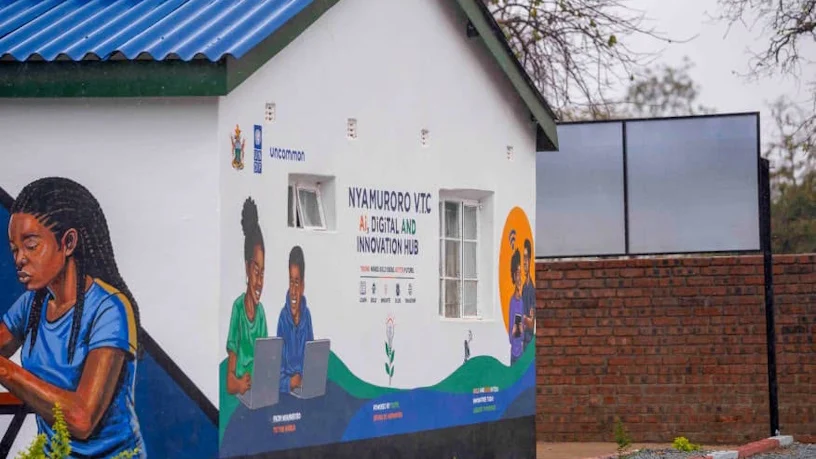
Zimbabwe has opened its first rural AI and digital innovation hub at the Nyamuroro Vocational Training Centre in Gokwe North, a remote district in the Midlands province.
The facility has enrolled 52 young people and received 20 laptops from the ICT ministry. It will offer access to computers, digital skills training, AI, coding and innovation opportunities.
Why the location is the story
Most African AI hubs open in capitals and university cities. Gokwe North is neither.
“Zimbabwe’s digital transformation must not be confined to our cities and urban centres,” said Kudakwashe Mupanhanga, Deputy Minister of Youth Empowerment, Development and Vocational Training. “It must reach our villages and rural communities so that no young person is left behind because of where they live.”
That frames geography as the inclusion variable — a different starting point from programmes organised around income or education level, and the one that determines whether national digital strategies reach past the cities that write them.
“The launch is more than the opening of a training facility,” Mupanhanga said. “It opens the gateway through which young people in rural Zimbabwe can access digital skills, artificial intelligence, coding, innovation, and the opportunities of the digital economy.”
He added that connectivity must be matched by skills that let communities use technology productively.
An access point, not a standalone
The hub will connect rural learners to existing national programmes, including the 1.5 Million Coders Programme and the government’s cybersecurity programme.
That design matters. A hub that feeds into national initiatives functions as a point of access to something larger, rather than a facility dependent on its own curriculum and funding cycle.
The scale, stated plainly
Twenty laptops and 52 students is a pilot.
The stated ambition — delivered in partnership with the UNDP and Uncommon.org — covers broadband expansion across all 2,400 administrative wards, building on the Presidential Internet Scheme launched in 2025.
The announcement does not say how many wards currently have broadband, what connectivity the Gokwe hub itself has, what the programme costs, or when further hubs will open.
Those are the figures that would show whether one rural hub is the first of a network or the demonstration of one.