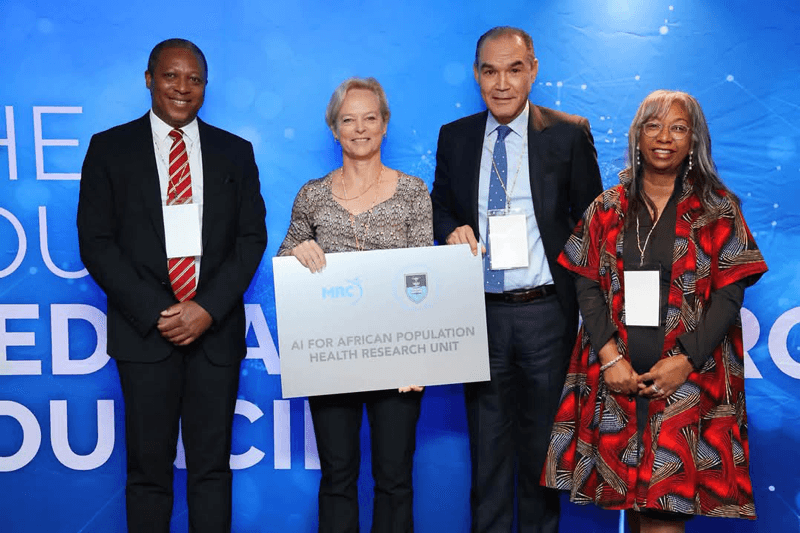
The South African Medical Research Council and the University of Cape Town have launched an AI for African Population Health Unit that will build machine learning tools trained specifically on African biomedical and clinical datasets — a direct response to the problem that most medical AI is trained on populations it will never treat.
The unit began operating this month at UCT’s Computational Biology Division in the Faculty of Health Sciences, led by Professor Nicola Mulder. It is one of seven new SAMRC Extramural Research Units launched on 28 July, two of which are based at UCT. The second is the SAMRC/UCT Discovery Neuroscience in Children unit, focused on acute brain conditions. The SAMRC now operates 30 such units across South African and international science councils, medical schools, universities and research institutes.
What it will build
Mulder said the unit aims to develop, test and apply AI and machine learning tools tailored to African population health contexts, and to create a framework for integrating multimodal data.
The clinical targets span both halves of South Africa’s disease burden. On non-communicable diseases, the tools are intended to improve early detection of cancer, diabetes and cardiovascular disease. On infectious disease, the focus is improved diagnosis, risk assessment and clinical management of tuberculosis, HIV and malaria. The unit will also work on identifying precise biomarkers, improving diagnostic accuracy, and supporting personalised therapeutic choices across diverse African patients and healthcare settings.
The scientifically distinctive element is the interaction between those two categories. Mulder said the unit will use African data and AI techniques to uncover disease mechanisms and how non-communicable and infectious diseases interact — a research question shaped by African epidemiology rather than imported from elsewhere.
Why the data provenance matters
The unit’s founding premise addresses a documented failure mode. Research published this year by Johns Hopkins University and the US Food and Drug Administration demonstrated how medical AI trained on unrepresentative datasets learns to associate incidental features — imaging equipment quality, clinic-specific metadata conventions — with clinical outcomes, producing systems that appear accurate in testing and fail on deployment. The researchers described this as creating health disparity by design.
Africa-specific data gaps have already constrained clinical work locally. UCT’s Holistic Drug Discovery and Development Centre published research in January combining machine learning with pharmacometrics to predict how African genetic variants affect metabolism of malaria and tuberculosis drugs — work undertaken precisely because the variability was poorly characterised in African populations and few tools existed to predict its impact.
Who is running it
Mulder holds a PhD in medical microbiology with a focus on molecular biology, developed her bioinformatics expertise at the European Bioinformatics Institute, and has led pan-African bioinformatics capacity-building initiatives at UCT for more than a decade. She was elected to UCT’s College of Fellows in 2016, made a Fellow of the African Academy of Sciences in 2018, and named a Fellow of the International Society for Computational Biology in 2025. For the past four years she has run an open data science platform for DS-I Africa, an African data science consortium.
Her route into AI was incremental rather than opportunistic. Bioinformaticians have used machine learning techniques for a long time, she said, and as datasets have grown larger and more heterogeneous, extending into broader AI methods followed naturally.
The unit includes mid-career scientists Dr Musalula Sinkala and Dr Hocine Bendou, both working on applying data science to biomedical research, alongside UCT collaborators with expertise in biomedical imaging, proteomics and ethics.
Training and ethics built in
The unit will train postgraduate students in interdisciplinary skills with a stated focus on previously disadvantaged students, and will examine the ethics of AI to ensure responsible use — a scope that places governance inside the research programme rather than alongside it.
Mulder said UCT’s positioning made it a natural base, citing existing connections with clinicians, biomedical researchers and core facilities in the Faculty of Health Sciences and the Institute of Infectious Disease and Molecular Medicine, and access to significant computing facilities.
Professor Liesl Zühlke, SAMRC vice-president of Extramural Research and International Portfolio, said the unit represents a step forward in using AI to improve health outcomes across South Africa and the continent.
Asked what legacy she wants the unit to leave, Mulder pointed to people before publications: a new generation of multidisciplinary researchers, mid-career academics progressing into senior leadership, and postgraduate students — alongside advances in applying AI to African health challenges.