Artificial intelligence is advancing faster than almost any technology before it, and the window to shape how it serves humanity is narrowing.
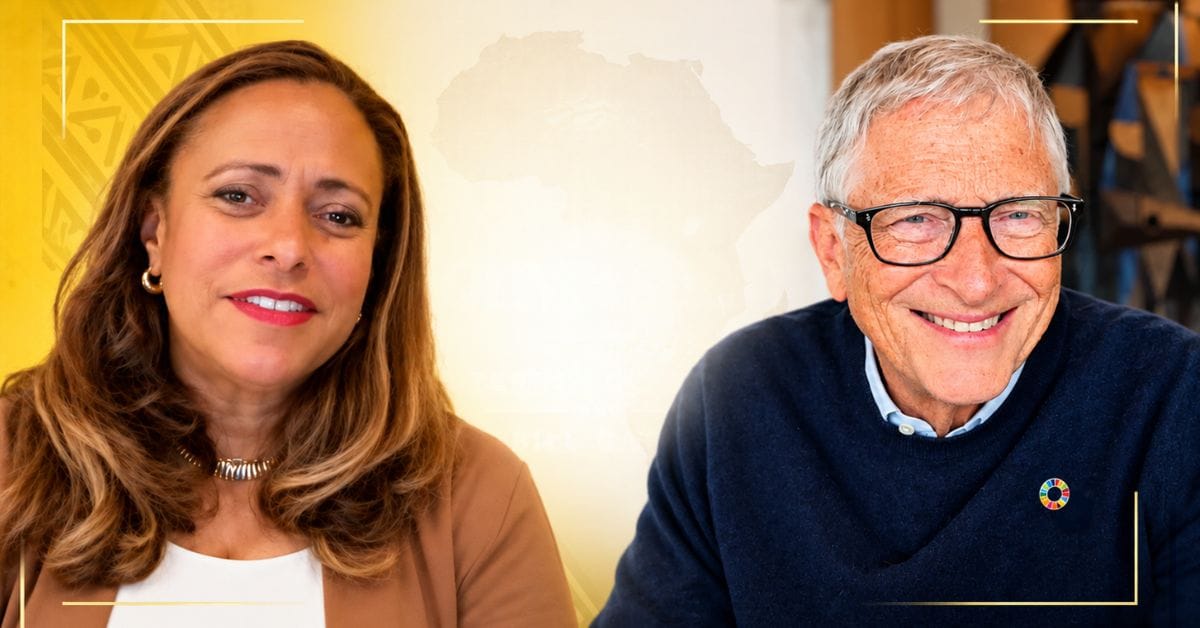
In a wide-ranging conversation, Africa.com Chair and Executive Editor Teresa Clarke spoke with Bill Gates, Microsoft co-founder and chair of the Gates Foundation, about what the moment means for developing nations and for Africa.
Gates spoke as both a technologist who helped build the personal computing era and a philanthropist whose foundation works on health, agriculture and education across the Global South. AI holds extraordinary promise, he argued, but realising it depends on choices being made now.
A double-edged moment
Gates described the period ahead as turbulent. As AI gains acceptance worldwide, the decisions societies make today will determine whether it becomes a force for good or a source of significant injustice.
He remains enthusiastic about its potential, while cautioning against overlooking downsides that are not yet widely understood. Optimism and vigilance, in his view, are not in conflict. Both are required.
Beyond the technology industry
Gates argued that AI’s direction cannot be left to the technology industry alone, calling on academics, think tanks, citizens and political leaders to engage with the questions it raises.
Political and policy frameworks will largely determine how well societies limit AI’s harms and accelerate its benefits. The response from those institutions, he said, has not matched the urgency of the moment.
Where AI is already delivering
Agriculture is among the fastest-moving areas in Africa. Tools are already helping farmers decide when and what to plant, anticipate weather and identify crop diseases.
Gates framed Africa’s information gap as an opportunity. Where farmers and businesses have historically lacked timely, reliable information, AI can unlock productivity and economic gains.
Health and education call for more care. Mistakes in those sectors carry higher stakes, so AI must be introduced thoughtfully and with safeguards against error.
Closing the language gap
Grounding AI tools in local data and local languages was a central theme. Gates acknowledged a market failure: commercial incentives alone have not produced high-quality coverage of African languages.
He described a significant investment being organised in collaboration with technology companies, with the goal of bringing African languages to near-parity with English in AI applications — so that millions can use these tools in the languages they speak daily.
Augmenting, not replacing
On jobs, Gates offered a perspective distinct from anxieties common in wealthier economies. Africa’s challenge is not a surplus of workers at risk of displacement but a shortage of trained professionals such as doctors and teachers.
In that context, AI can extend the reach of the professionals already there, making them more productive rather than replacing them. He described the potential upside for Africa over the next five years as huge.
The infrastructure question
Broad adoption requires physical infrastructure, and Gates addressed data centres directly, acknowledging concerns about their environmental and social footprint, including pressure on water and power.
With minimal water use and access to low-cost energy, he argued, data centres can benefit host communities rather than burden them. Getting those conditions right will matter as more countries seek to build their own AI capacity.
Build, buy or partner
Asked how Africa should approach AI, Gates was realistic. The largest foundation models will continue to come from major companies in the United States and China.
The opportunity lies in customisation. By adapting global models to local languages, data and regional needs, African developers and institutions can create tools that serve their own markets. Gates sees this as the main path for AI development on the continent.
Heeding the warnings
Gates closed by reflecting on the warnings he issued about pandemic preparedness before COVID-19, and how slowly the world acted on them. He urged that AI not follow the same pattern.
Foresight only matters if it leads to action. With engagement from policymakers, researchers, businesses and citizens, AI can become one of the most powerful tools ever created for expanding opportunity. Without it, the technology risks widening the very divides it could help close.
The conversation offers a practical roadmap: invest in local languages and data, build infrastructure that serves communities, empower professionals, and partner wisely. The choices made now will decide who benefits.
Based on an Africa.com interview conducted by Teresa Clarke.