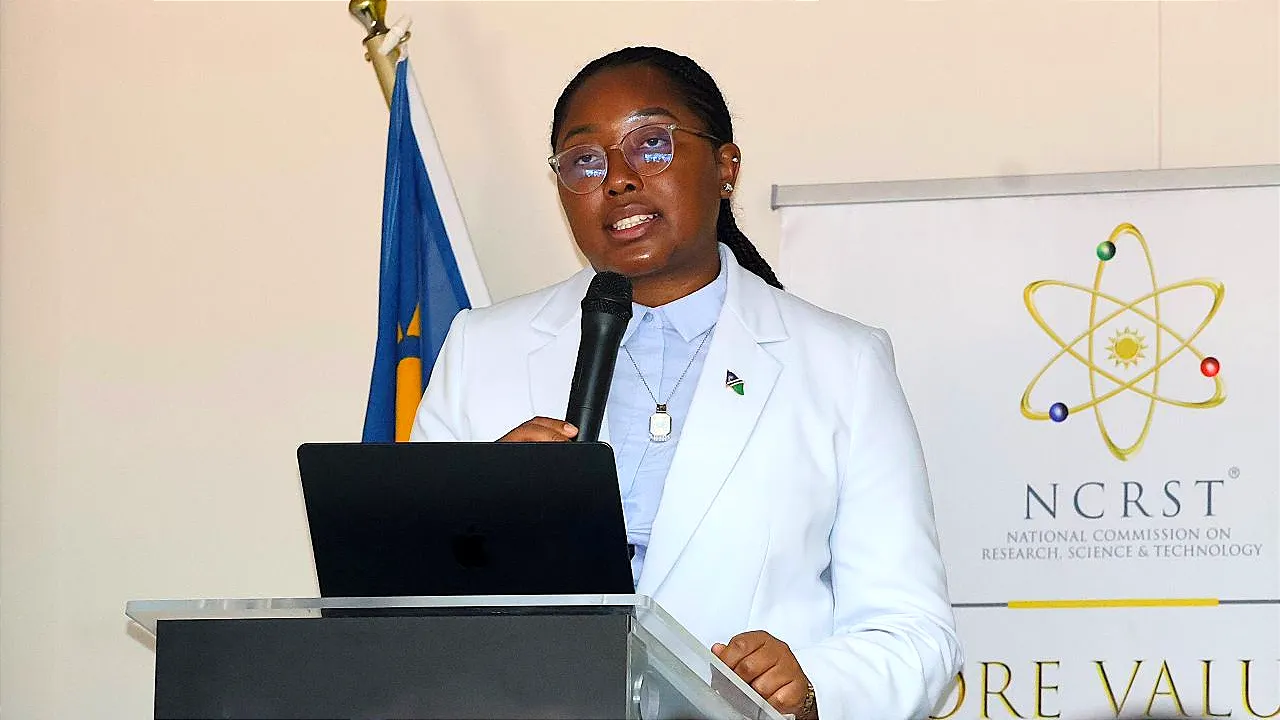
Namibia’s National Commission on Research, Science and Technology opened a National Artificial Intelligence Institute on 23 September, structured around four centres that correspond directly to weaknesses identified in the country’s own 2025 AI Readiness Assessment.
That correspondence is the notable part. Most African AI institutions are announced without a published diagnosis behind them.
Gaps and centres
| 2025 assessment found | Institute centre |
|---|---|
| Shortage of training data for Namibia’s indigenous languages | Datasets |
| Gaps in AI skills; need for more R&D funding | Research and Development |
| Limited local solution development | Software Development |
| Need for support for local AI startups | AI Innovation |
The assessment also recorded progress — improved connectivity, AI ethics embedded in university curricula — alongside unresolved problems the institute does not address: no formal AI regulatory framework, an unfinished Data Protection Bill, and limited rural electricity access.
The language gap
The indigenous language finding is the most concrete and the most actionable.
Oshiwambo, Otjiherero, Khoekhoegowab, Rukwangali and Namibia’s other languages are effectively absent from AI training data. The GSMA estimates fewer than 2% of African languages receive meaningful support from modern AI platforms.
A national centre with an explicit datasets mandate would be among the few on the continent — alongside Masakhane’s hub, the GSMA’s ATLAS Umoja initiative and the 26 projects funded through LINGUA Africa. Whether Namibia’s centre produces open datasets or internal resources will determine how far that work travels.
Connecting, not adding
NCRST chief executive Professor Anicia Peters framed the institute as linking existing research expertise, computing infrastructure and data capacity rather than building parallel capability — so that Namibia does not remain solely a consumer of AI developed elsewhere.
The institute is designed as an open national platform bringing together government, academia, industry, researchers, students and the public, intended to strengthen existing institutions rather than replace them.
That design choice responds to a real risk. Namibia already has NCRST itself, NIPAM delivering AI training to civil servants, the Namibia University of Science and Technology running the country’s first AI degree programmes alongside an AI and Robotics Accelerator, the privately run NOVA institute, and a national AI Council. A fifth standalone body would compound fragmentation rather than reduce it.
A coordinating layer is the right answer in principle. It is also harder to operate than to announce, and the institute’s effectiveness will depend on whether those existing institutions treat it as a hub or a competitor.
Who was there
ICT Minister Emma Theofelus attended, alongside Dr Lisho Mundia, Deputy Executive Director for Higher Education, Training, Research and Innovation, who stressed building human capital and equipping young Namibians for a technology-driven economy.
Theofelus holds one of eight African seats on the AI for Good Global Commission launched in July, co-chaired by Rwandan President Paul Kagame. That gives a country of roughly three million people a direct line between domestic capability-building and global governance discussion — an unusual position for its size.
The institutional basis
The institute derives from Namibia’s Sixth National Development Plan, the National Digital Strategy, the AI Readiness Assessment Report, and Cabinet Decision No. 14th/23.08.22/001, which acted on recommendations from the Presidential Fourth Industrial Revolution Task Force.
NCRST was formally assigned responsibility both for establishing the institute and for leading development of Namibia’s National AI Strategy. Responsible and Namibia-centred AI is the stated guiding principle.
What hasn’t been published
No budget, staffing numbers or timeline have been disclosed, and no date has been given for the National AI Strategy the institute is mandated to develop.
Namibia has shown it will enforce process on AI procurement — the agriculture ministry cancelled a N$40 million AI crop-monitoring contract with US firm 6th Grain in August after a review found it failed to meet legal and procedural requirements. An institute built on a published assessment, in a country prepared to cancel contracts that skip the rules, is a reasonable foundation. The figures would show how much is behind it.