Utilities across Africa have entered a new era of digital grid management, with artificial intelligence, smart metering and real-time operational visibility emerging as critical tools for managing electricity networks, according to a panel discussion at the Enlit Africa conference in Cape Town.
Participants outlined how data-driven technologies are reshaping grid operations, improving forecasting accuracy and strengthening system resilience across the continent. The discussion, moderated by Pitso Sekhoto, middle manager at the National Transmission Company of South Africa, explored the operational realities of deploying advanced metering infrastructure, managing massive data streams and using AI to turn raw data into actionable insights.
Herman Mare, general manager for protection and control at ACTOM, traced the evolution of grid protection systems from electromechanical relays to highly digitized, interconnected networks. “Electromechanical relays were similar to old electromechanical metres. You essentially only knew whether there was power or no power, or whether a trip had occurred. Digitisation has fundamentally changed the amount of information available from protection systems,” he said.
Modern utilities can now monitor networks on a national scale in real time, with data flowing in milliseconds — enabling operators to design wide-area protection systems capable of responding to events occurring hundreds of kilometres apart. “Something happening in Mpumalanga can now influence a protection decision in Cape Town,” Mare said, describing the development as “revolutionary” for grid protection.
But he cautioned that digitalization introduces new risks, particularly around skills shortages. Traditional protection engineers were trained to work with physical tools such as multimeters and screwdrivers, whereas modern grids require expertise in data analytics, network communications and fibre optic systems. “We now need data analysts and people who understand layered network communications. The challenge is how to transition technicians with 30 or 40 years of field experience into maintaining digital networks,” he said. While cybersecurity remains a concern, Mare argued the more immediate risk for utilities is the widening skills gap.
The growing importance of data visibility was echoed by Zama Mkhize Pila, group ESG manager at Dis-Chem, who highlighted the connection between electricity consumption, emissions reporting and corporate sustainability strategies. “At the centre of any economy is electricity. The link between ESG and electricity use has not really been fully made,” she said. As businesses collect more detailed consumption data through metering and monitoring systems, they can track emissions, improve efficiency and support decarbonization. “Data helps us identify inefficiencies and engage more intentionally with operations. Boards now want detailed insight into energy use, carbon accounting and future sustainability targets,” she said.
Pila said AI and advanced analytics would become increasingly important in helping companies move from analyzing historical data toward predictive planning. “There’s a shift from looking backwards at historic data to asking what this data is telling us about the future,” she said, adding that corporate energy data could also support national planning efforts as renewable energy deployment accelerates.
The importance of network-level visibility was reinforced by Cleophas Ogutu, project manager for GIS data clean-up and loss reduction at Kenya Power, who described accurate network visibility as the “foundation” for reducing both technical and non-technical losses. “You need to know where your assets are, where your metres are connected and how they are mapped to the grid. Without visibility, utilities are effectively walking blind,” he said. Improved GIS visibility had enabled Kenya Power to separate technical losses from commercial losses and allocate resources more effectively. But Ogutu warned that poor-quality GIS data remains one of the greatest risks facing utilities deploying AI forecasting and smart metering systems. “All these major investments depend on clean, structured and complete data. If they are built on poor data, the investment becomes useless.”
Al’Louise Van Deventer, general manager for engineering and technology at South African utility Eskom, described data as “the eyes and ears of the operator.” “Without visibility, operators cannot make the decisions needed in real time to protect the grid,” she said, pointing to global blackout events as evidence that failures in operational visibility can have severe consequences.
As more distributed technologies such as rooftop solar systems and electric vehicle charging stations connect to networks, utilities require increasingly detailed real-time visibility to maintain safety and stability. “If a line is isolated but operators don’t have visibility that it remains live because of embedded generation, people can be electrocuted,” Van Deventer said.
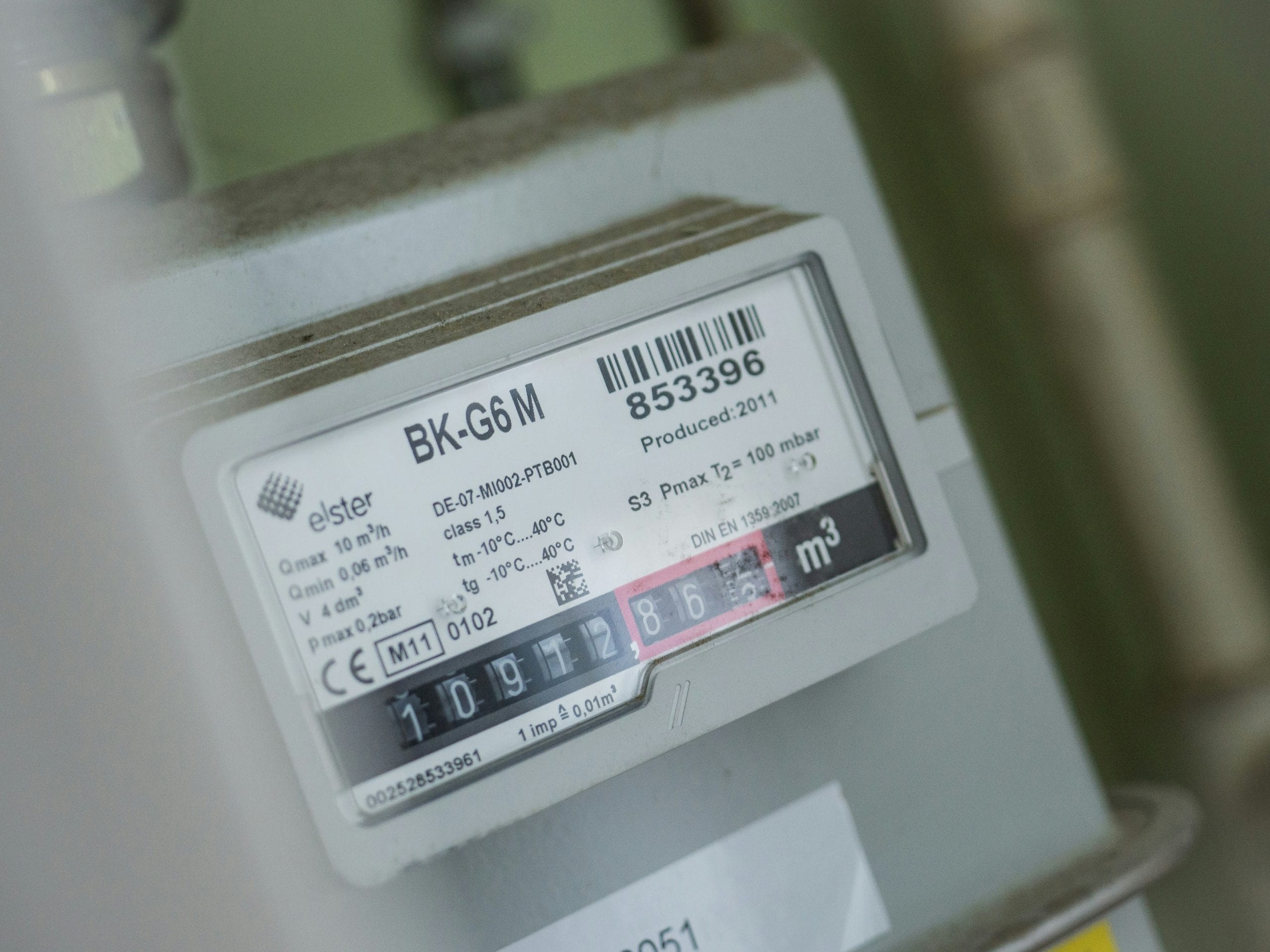
She also highlighted the enormous data volumes now being generated by smart meters, noting that Eskom has deployed more than two million, creating continuous streams of operational data. “The data never stops. You cannot simply switch it off,” she said — arguing that managing these datasets has made AI “almost critical” for utilities, both to process data volumes and to prioritize meaningful insights while filtering out operational noise. “You cannot reach advanced levels of modernisation without AI. It becomes impossible to process those data sets manually.”
While African utilities face significant challenges around data quality, skills development and infrastructure modernization, the panel concurred that digitalization and AI are rapidly becoming essential tools for building more resilient, efficient and customer-focused electricity systems.