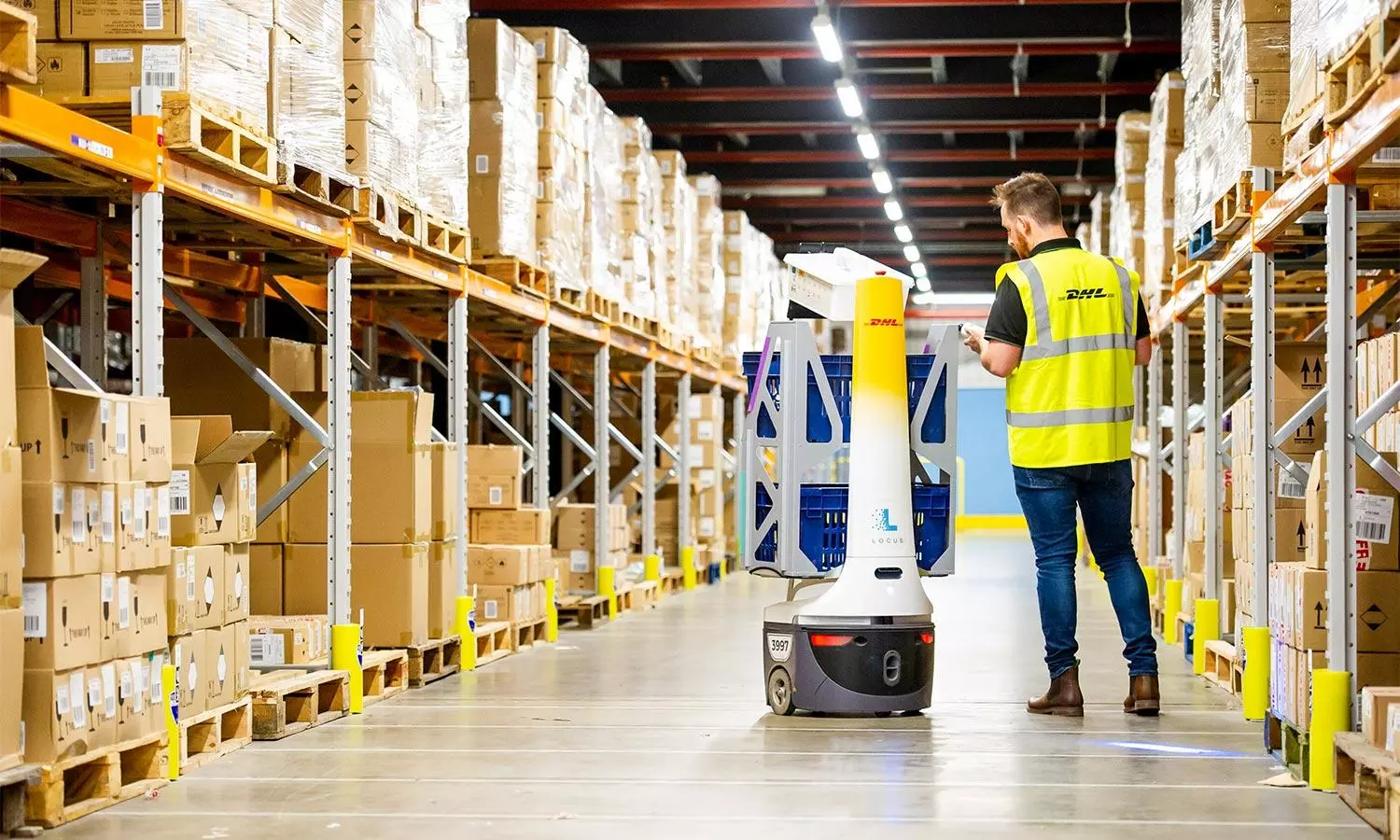
AI is moving from assisting logistics workers to acting independently across supply chains, according to DHL’s Logistics Trend Radar 8.0 — with agentic systems, data centre logistics and humanoid robots named among the trends reshaping the sector.
Agentic AI as an operating layer
DHL identifies Agentic AI as one of its most significant emerging trends: systems that plan, make decisions and execute actions autonomously against defined objectives, rather than responding to prompts or analysing information on request.
Alongside it, AI Analytics is positioned to identify patterns, predict disruptions, forecast outcomes and recommend actions at speed. Applications named include predicting inventory shortages, rerouting shipments during disruption and adjusting transport capacity in real time.
Klaus Dohrmann, DHL’s Vice President of Innovation and Trend Research, said the industry is entering an era of autonomous and physical AI — systems that perceive their surroundings, operate in complex environments and make decisions with limited human intervention.
The Compute Economy
The trend with the most direct bearing on infrastructure is the one DHL calls the Compute Economy: the growing strategic importance of computing infrastructure and data centre logistics.
Moving, installing and servicing data centre equipment is becoming a logistics category in its own right. Every facility announcement carries a supply chain behind it — specialised hardware, cooling systems, power equipment — and DHL is signalling that this is now a business line rather than an occasional contract.
Two further trends sit alongside it. AI Commerce is changing how consumers and businesses discover and purchase products. Humanoid robots are identified as a longer-term development with potential to reshape automation in physical environments.
People remain the business
The report’s second section argues the future of logistics stays a people business.
Wearable sensors, remote operations, collaborative robots and AI workplace assistants are described as creating safer and more productive environments by absorbing repetitive tasks, freeing employees for problem-solving, customer service and operational oversight.
DHL identifies Employee Belonging and the Augmented Workplace as key trends, affecting frontline, technical and knowledge roles alike.
“The future of logistics will not be defined by human versus AI, but by how effectively organisations combine human expertise with increasingly capable technologies,” said Thomas Ogilvie, DHL Group’s Chief Human Resources Officer and Labor Director.
Katja Busch, Chief Commercial Officer and Head of DHL Customer Solutions Innovation, framed the report’s purpose around timing. “The organisations that succeed will be those that understand these shifts early and are able to turn them into practical advantages.”
Governance and sustainability
As systems take on more autonomy, DHL identifies AI Ethics and Cybersecurity 2.0 as trends balancing innovation against governance, resilience and security.
With intelligent systems increasingly involved in demand forecasting, inventory planning and transport decisions, the report stresses strong safeguards and human oversight alongside technological advancement.
On sustainability, it points to decarbonisation, sustainable fuels, circularity and electrification of heavy and light vehicles — including electric delivery fleets, alternative fuels and supply chain redesign for reuse and resource efficiency.
Originally published by STAT Trade Times, republished by Logistics Update Africa.