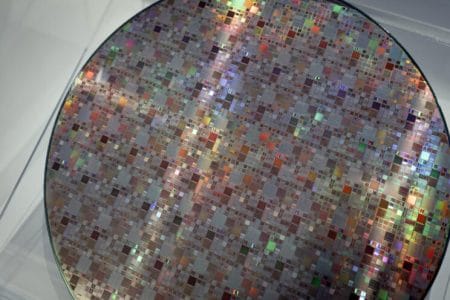
The United States has escalated its semiconductor conflict with China by implementing a sweeping global ban targeting Huawei’s Ascend AI chips. The move, announced May 14, 2025, marks a significant shift in Washington’s export control policy – applying restrictions not just domestically, but worldwide.
The Biden-era “AI Diffusion Rule” has been rescinded without a direct replacement, and in its place, the Bureau of Industry and Security (BIS) released new guidance warning of enforcement actions – including fines and imprisonment – for companies using Huawei’s AI processors anywhere in the world.
The targeted chips- Huawei’s Ascend 910B, 910C, and 910D – are believed to be built using U.S.-origin technology or tools, thereby triggering extraterritorial enforcement under U.S. law.
This policy shift reflects growing concern in Washington over Huawei’s rapid technological progress despite years of sanctions. The company stunned the global tech industry with the 2024 release of its Mate 60 Pro smartphone, which featured an advanced 7-nanometer chip produced without U.S. support. Reports now suggest Huawei’s AI chip performance rivals Nvidia’s top-tier offerings.
The U.S. response, however, has drawn criticism from across the global tech landscape. “This forces tech firms worldwide to choose between U.S. and Chinese hardware,” said one analyst, warning that such binary choices undermine the nuanced reality of global technology development, which relies on cross-border collaboration.
Even U.S. industry voices have raised alarms. Critics argue that aggressive export controls stifle innovation and artificially sustain monopolies by restricting access to competitive alternatives. A recent performance analysis suggests Huawei’s Ascend 910B chip delivers up to 80% of the efficiency of Nvidia’s A100 when training large language models – and in some tests, it outperforms Nvidia’s chip by 20%.
“The paradox is clear,” said one observer. “In trying to preserve technological leadership, these policies may encourage the growth of rival ecosystems and reduce American influence.”
The secrecy surrounding Huawei’s AI chips only heightens the tension. The company has declined to officially confirm specs, production timelines, or even model names since the latest wave of U.S. sanctions, leaving researchers reliant on third-party teardown reports.
Chim Lee, a senior analyst at the Economist Intelligence Unit, warned that strict enforcement could provoke retaliation from Beijing and inject new volatility into ongoing U.S.-China trade negotiations.
More broadly, the ban raises difficult questions about sovereignty, international law, and innovation policy. Should a startup in Brazil or a research institute in Europe be barred from using cost-effective AI chips based solely on U.S. geopolitical priorities? Does global enforcement of American rules risk undermining the very alliances and open systems that foster progress?
The semiconductor industry, a linchpin of the global economy, has long depended on international collaboration, shared standards, and open innovation. Fragmenting this system with sweeping unilateral controls could isolate nations and accelerate the formation of parallel tech ecosystems.
Nvidia CEO Jensen Huang recently acknowledged Huawei as “one of the most formidable technology companies in the world,” adding that “China is not behind” in AI development. With tech capabilities advancing rapidly in Asia, experts warn that policy should focus on out-innovating competitors rather than cordoning them off.
While national security remains a legitimate concern, many argue that the current approach leans more toward technological protectionism than strategic foresight. In a world facing shared challenges—from climate resilience to healthcare breakthroughs – cooperative innovation remains crucial.
As the global AI chip ban takes hold, the world must consider whether the future of tech will be driven by collaborative excellence – or splintered by control.