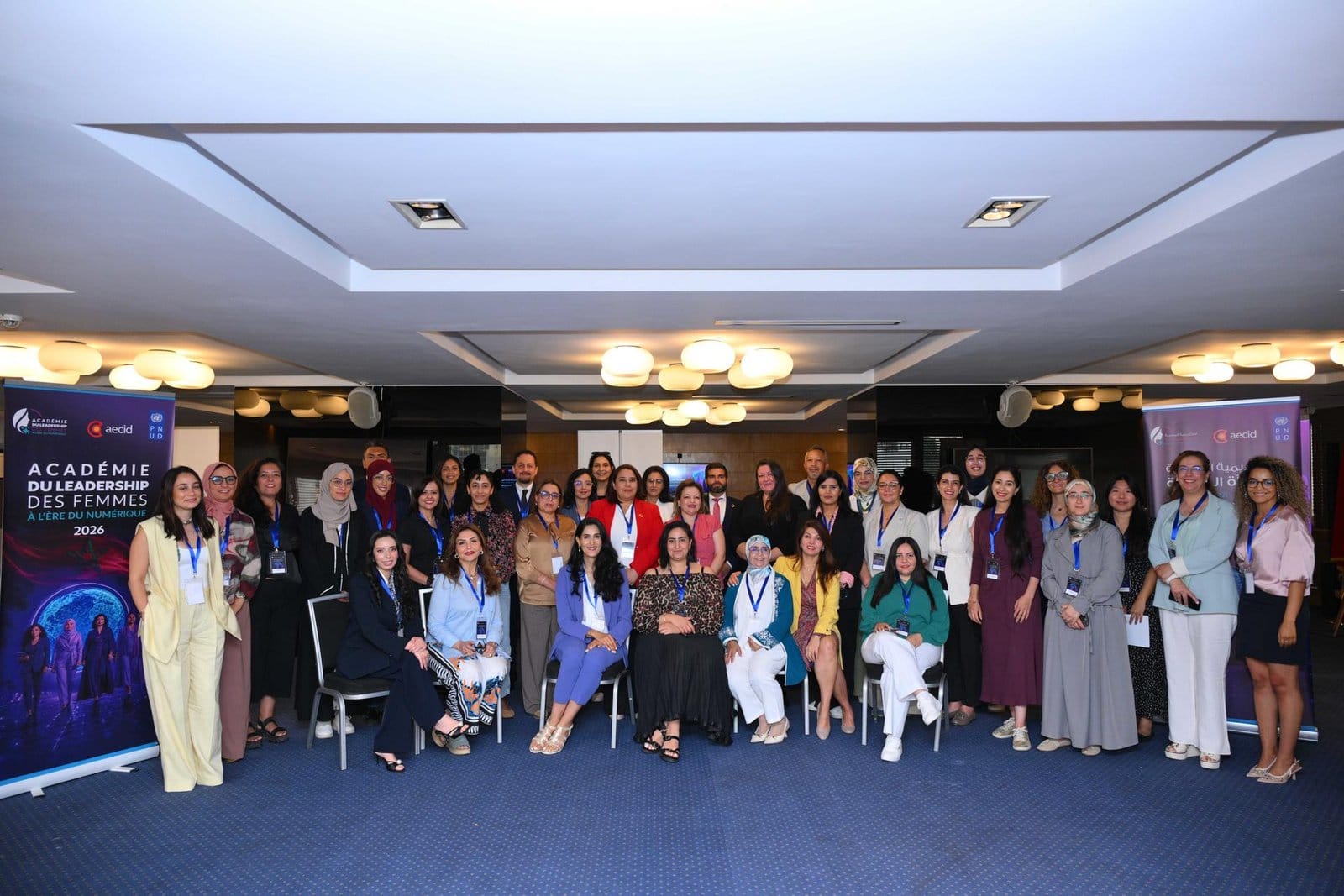
Morocco has announced a new Women’s Leadership Academy for the Digital Era in partnership with the United Nations Development Programme (UNDP), positioning the initiative as part of the country’s broader effort to close the gender gap in senior technology, public administration and executive roles.
The Academy is designed to equip women leaders with digital, leadership and innovation skills, with a stated focus on preparing participants to steer both public and private sector organizations through fast-moving technological change. Details on cohort size, launch date, curriculum structure and funding were not disclosed in the announcement.
The initiative adds a new institutional layer to a digital-inclusion agenda Morocco has been building out in visible steps over the past year. In March, the Ministry of Digital Transition and Administrative Reform launched a national mentorship programme with Capgemini aimed at bringing more young women into technology, drawing its inaugural cohort from universities across Tangier, Settat, Casablanca-Mohammedia and Fez. Digital Transition minister Amal El Fallah Seghrouchni argued at the time that competitiveness had to be built with “all talents” and that Morocco’s digital transition would require the full integration of young women into technology sectors.
The UNDP partnership on the Leadership Academy fits inside a wider Morocco-UN cooperation track. Last month, Seghrouchni used the UN’s Open Source Week to advance the Kingdom’s AI, open-source and South-South cooperation agenda, meeting with senior UN officials including UNDP Resident Representative in Morocco Ilaria Carnevali. Morocco’s national AI strategy runs to 2030 under the “AI Made in Morocco” banner, and includes partnerships with Mistral AI, participation in the European AI Factories initiative and the ongoing build-out of the Digital for Sustainable Development Hub and the Al Jazari ecosystem.
The Academy will operate against a policy backdrop in which the case for gender inclusion in digital and AI leadership has moved from advocacy to operational necessity. Women remain under-represented in technology, public administration and executive roles across the continent, and the UNDP has argued that expanding women’s participation in senior tech and policy positions is central to achieving the Sustainable Development Goals — a framing Morocco has explicitly aligned itself with as it builds out its digital economy.
Whether the Leadership Academy translates into a durable pipeline of women into senior digital and AI decision-making roles — rather than an additional line in the country’s growing portfolio of well-branded skills programmes — will depend on details the launch announcement did not yet cover: the size and selection criteria of the intake, the seniority of curriculum design, the placement outcomes for graduates, and whether it feeds into Morocco’s own public-sector appointments as well as private-sector career tracks.