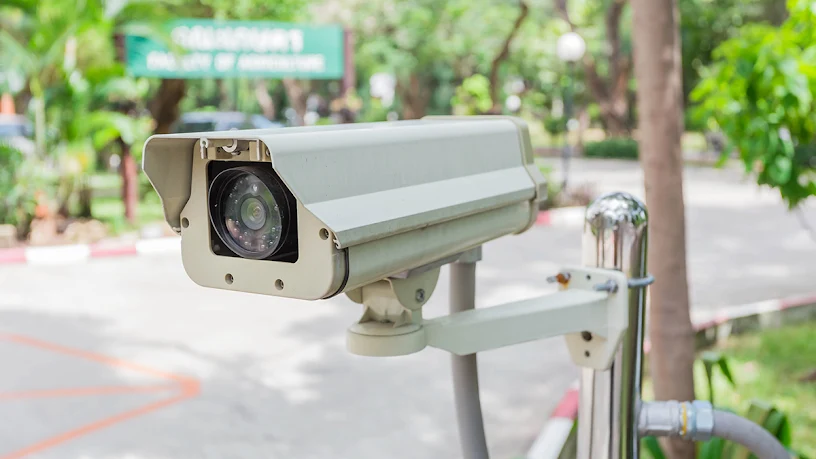
Malawi’s communications regulator has recommended installing AI-powered surveillance cameras across Blantyre, following an engagement with city assembly officials.
The Malawi Communications Regulatory Authority made the proposal under its Smart City Surveillance Initiative, outlined earlier this year.
“The smart AI cameras will help reduce theft and other criminal activities within the city,” said MACRA director-general Mayamiko Nkoloma. “Through collaboration with the Malawi Police Service and the Road Traffic Directorate, the system will strengthen crime prevention and response efforts.”
What is proposed
MACRA briefed Parliament’s Committee on Government Assurances and Public Sector Reforms in July on an AI Smart City pilot combining intelligent surveillance cameras, number plate recognition, pedestrian and traffic monitoring, and a central command centre for real-time coordination between government agencies.
Initial deployment would cover Chichiri Roundabout, the MUBAS pedestrian crossing, Clock Tower Roundabout and Limbe Market.
No cost, funding source, timeline or camera count has been published.
The case for it
Blantyre, Malawi’s commercial capital with a population above 932,000, has seen deteriorating security including daylight robberies, vandalism and cable theft. Nkoloma cited recent incidents, among them the kidnapping this month of a British national who was later rescued by police.
Blantyre City Council chief executive Costly Chanza welcomed the proposal, noting that the Blantyre Urban Structure Plan 2024-2039 prioritises safety and security.
The problem the system is meant to solve is also the risk to it
Lilongwe’s strategic public CCTV network has faced rollout delays caused by vandalism and cable theft — two of the offences the Blantyre system is intended to deter.
That is not a minor operational note. A camera network is physical infrastructure with copper in it, deployed in a city where copper is being stolen. Whether the Blantyre design accounts for that has not been addressed.
The governance question
Malawi does not have a national AI policy. It is developing one, and the country participates in regional harmonisation work, but no framework currently governs how AI systems are procured, deployed or overseen by the state.
That matters here more than in most deployments. Number plate recognition linked to a central command centre creates a record of vehicle movement across a city. If the cameras include facial recognition — which MACRA has not stated either way — the system generates a record of people’s movement as well.
The questions that would normally attach are unanswered: how long footage is retained, which agencies can access it, what oversight applies, and whether Malawi’s data protection provisions cover it.
Morocco faced comparable scrutiny when its national security directorate deployed AI patrol vehicles with facial recognition and automatic number plate recognition in Casablanca in July. Morocco at least has the CNDP, a data protection authority with a mandate over exactly this category of processing, and a national responsible AI platform in development. Malawi has neither yet.
None of that makes the proposal unreasonable. Urban crime in Blantyre is real, and surveillance is a legitimate tool. But a telecoms regulator recommending a police surveillance network, in a country still drafting its AI policy, is a sequence worth noticing — and the framework that would govern the system is the piece that has not yet been built.