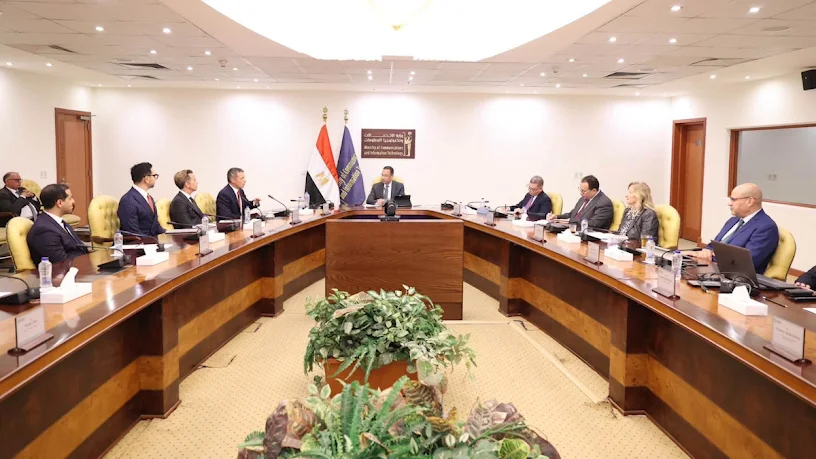
Egypt’s Ministry of Communications and Information Technology is preparing a memorandum of understanding with NVIDIA covering AI, computing, digital skills and innovation support, following a meeting between ICT Minister Raafat Hindi and NVIDIA vice president for Europe, the Middle East and Africa, Paolo Guglielmini.
The MoU has not been signed and no value, timeline or hardware commitment has been disclosed.
What is on the table
Proposed areas include research and development in AI and advanced technologies, local talent development, support for entrepreneurs and startups, access to specialised technical and training content, and training programmes in AI, deep learning and the training of trainers.
The two sides also discussed strengthening Egypt’s domestic computing and AI capabilities to serve developers, researchers and institutions.
NVIDIA framed the objective as consolidating Egypt’s position as a regional AI hub and a destination for technology outsourcing, consulting services and advanced AI infrastructure.
Guglielmini said NVIDIA could accelerate Egypt’s ambitions through its ecosystem of accelerated computing, software and AI tools, and pointed to opportunities to support Egyptian solutions that address local needs while reaching global markets.
Hindi set out Egypt’s approach to AI across government operations, workforce upskilling, development efforts and public-interest applications, alongside building specialised AI skills domestically.
The discussion also covered the Creativa Innovation Hubs — the national network that ran a simultaneous AI hackathon across 17 governorates in August — and progress on the second National AI Strategy 2025-2030.
NVIDIA is already here
The direct government relationship layers onto commercial activity already under way.
NVIDIA backed the SIGNALS accelerator launched in Cairo with RiseUp, A15 and BitRoot, and its hardware powers the AI factory Vodafone Egypt and Cassava Technologies opened this month, offering GPU-as-a-Service with data processed inside Egypt.
An MoU with the ministry would add a state-level channel — most likely covering training content, developer programmes and research access rather than silicon, which is where NVIDIA’s government agreements typically sit.
The outsourcing angle
The reference to outsourcing and consulting is the commercially specific part, and it fits a visible pattern.
Konecta opened its first global generative AI centre of excellence in New Cairo in August as part of a $100 million investment. Deloitte has grown its Egyptian technology hub from 23 people to more than 900 and committed a further $80 million. Egypt’s digital exports rose from $3.3 billion in 2018 to $7.4 billion in 2025, and the country placed 16th globally and second in Africa on the inaugural Ataraxis Global Outsourcing AI Readiness Index.
Egypt’s strategy has been to court many partners rather than one. Hindi said as much last month, confirming the government is working with multiple global infrastructure providers rather than backing a single national champion — a posture visible across NVIDIA, Cassava, Intel, IBM, Microsoft, Oracle and Huawei arrangements running in parallel.
The National AI Strategy targets more than 250 AI companies, $42.7 billion in AI-related economic value and 30,000 trained AI specialists by 2030.