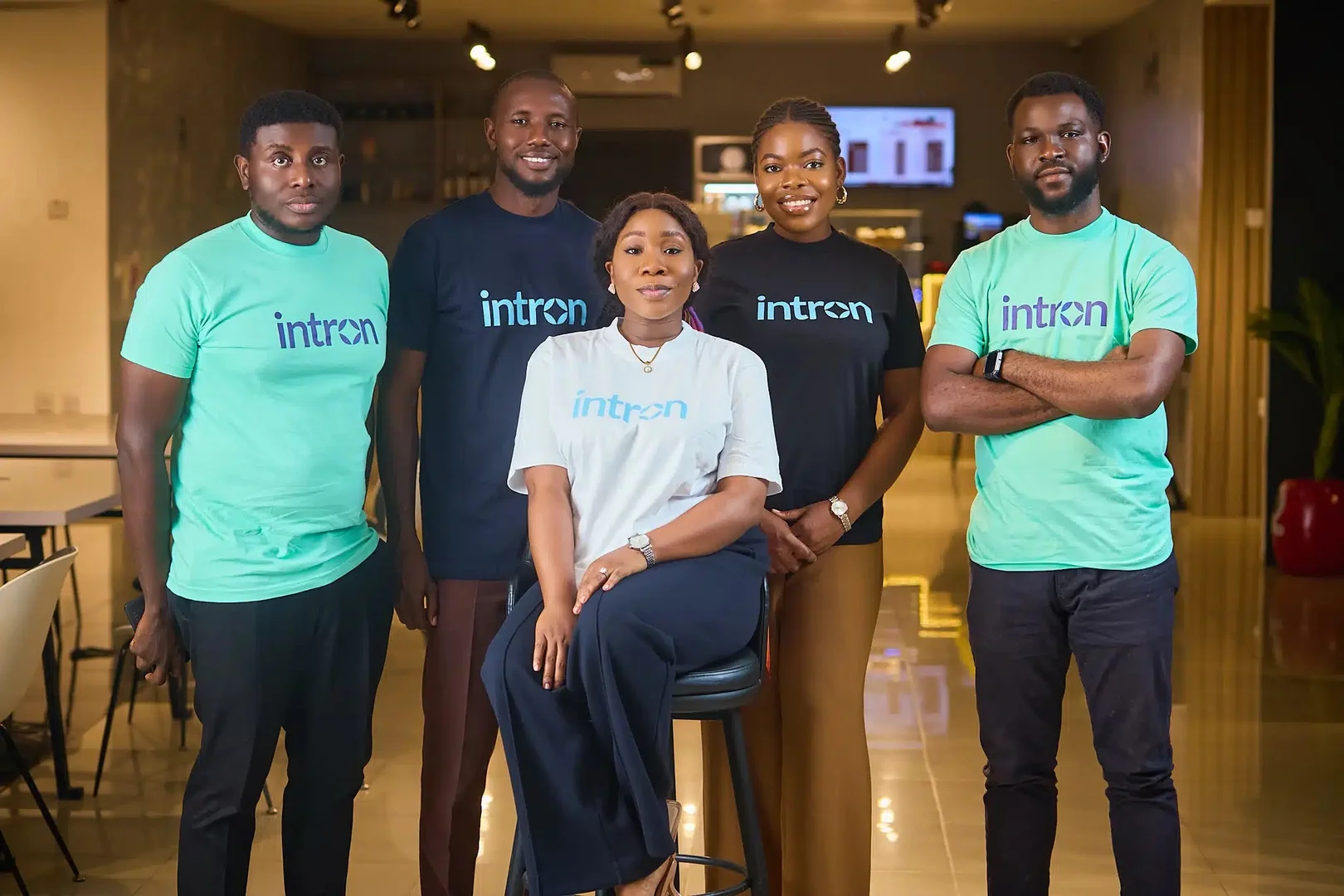
Nigerian voice AI company Intron has released Sahara v2.5, adding support for speakers who switch between English and an African language mid-sentence, and extending voice generation into Igbo and Hausa.
The update was driven by deployment failures rather than research ambition. The previous version handled code-switching between Swahili and English only. Once the model reached courtrooms, call centres and hospitals, that proved too narrow — speakers move into whichever language they are most comfortable in partway through a sentence, and the system lost the thread. Intron says customer feedback from those environments shaped the release.
Sahara v2.5 now supports code-switching across around 20 African languages, treating a change of language as part of the conversation rather than an error. The company says engineering effort concentrated on holding accuracy at the switch points, where speech recognition models typically degrade, and that performance benchmarks will be published separately.
That last point is worth noting. Intron built its reputation on published comparisons — its March release of Sahara v2 was benchmarked against Gemini-3, GPT-4, Whisper, ElevenLabs and AWS across 24 African languages, trained on 14 million audio clips from more than 40,000 speakers. Shipping v2.5 without numbers leaves the central claim unverified for now.
Voice generation in Igbo and Hausa
The second addition is synthetic speech. Text-to-speech has reached a usable standard in English while remaining difficult across most African languages — a gap that has constrained voice bots, public information campaigns and government services on the continent.
Intron says its model now generates speech in languages including Igbo and Hausa, and that the generated voice can switch language partway through an exchange. For a call centre, that means a bot able to meet a customer in their preferred language rather than defaulting to English.
A hospital in Enugu
One of the first deployments is at Meridian Hospital in Enugu, where consultations run mostly in Igbo.
The hospital had been using Intron’s English model for dictation, which meant a doctor finished a consultation and then recorded notes afterwards. Capturing the consultation itself removes that step, leaving the doctor editing a draft rather than writing one.
That is the kind of workflow change that distinguishes a deployed system from a demonstration — and it returns Intron to where it started. The company was founded by Dr Tobi Olatunji and Olakunle Asekun as a speech-to-text tool for doctors, and abandoned its first version when clinicians found it slowed them down.
How the business works
Intron found its model in use well beyond healthcare — in call centres and government agencies — largely because it recognises African names and accents that global systems mishandle. Its work with the Ogun State Judiciary cut court transcription times.
It now sells through an API allowing other companies to embed its speech and voice capabilities, while a direct sales team works donor-funded government partnerships and financial services. The company expects to reach profitability next year and declined to give revenue figures.
Models are trained on a mix of paid human recordings and a proprietary synthetic data system, for which Intron has filed a US patent application.
Data residency is handled case by case. One project with a hospital in Port Harcourt runs the model entirely offline. For customers sending audio to the cloud, Intron offers a zero-retention option under which it deletes material from its side once results are returned.
That flexibility matters commercially as African data protection regimes tighten. Nigeria’s Data Protection Act 2023 and the AI Control and Regulation Bill before the National Assembly both bear on how health and financial audio can be processed, and hospitals in particular have limited appetite for sending patient consultations offshore.
A widening field
Intron sits inside an African voice AI sector that has expanded quickly. Spitch now supplies Yoruba, Hausa, Igbo, English and Amharic speech models through Cencori’s gateway. Botlhale AI covers 11 South African languages for call centres. Untapped AI is building voice automation for South African accents. Nigeria’s state-backed N-ATLAS provides open-source speech recognition for Yoruba, Hausa, Igbo and Nigerian-accented English, and now anchors the GSMA’s five-government ATLAS Umoja initiative. LINGUA Africa is funding 26 projects across more than 50 languages.
Code-switching is where Intron is trying to hold a distinct position. It is also the hardest part of the problem, and the part most African speech actually consists of.