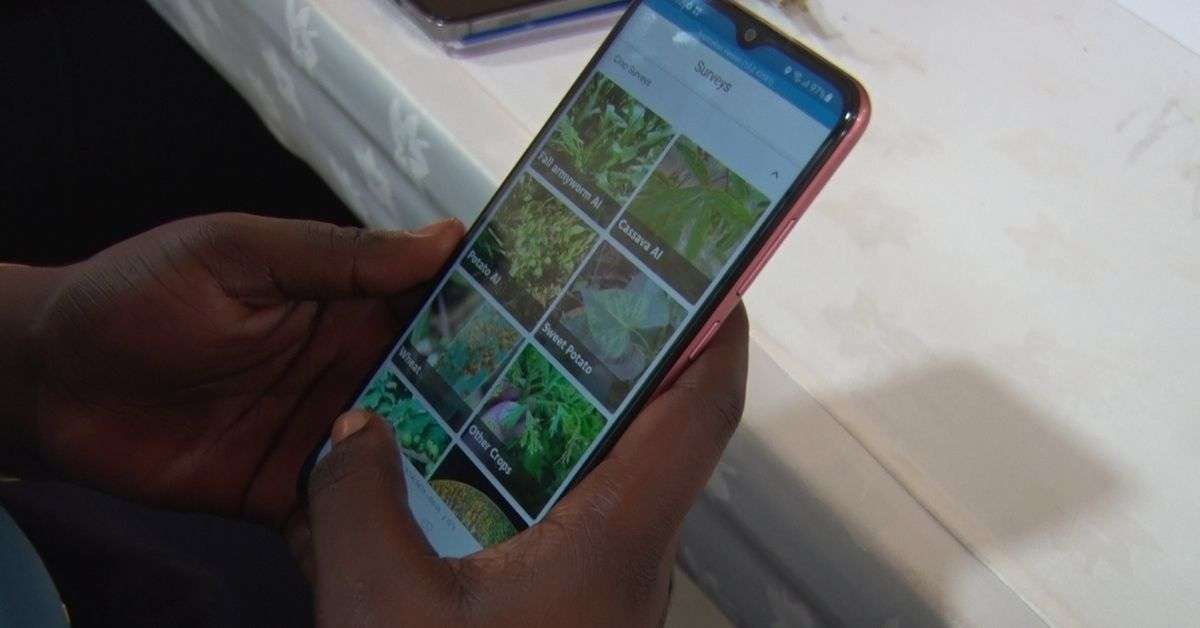
A Farmer’s New Best Friend
In the fields of Kenya and Nigeria, smallholder farmers are battling pests and climate change with a new ally: the AI-powered PlantVillage app. This mobile tool, developed to detect crop diseases early, is transforming agriculture for millions across Sub-Saharan Africa. By 2025, PlantVillage has empowered 500,000 farmers, boosting yields by up to 40% and proving that AI can be a lifeline for rural communities facing food insecurity.
The Tech: Eyes in the Sky, Insights in Your Pocket
PlantVillage uses AI to analyze photos of crops snapped on basic smartphones, identifying pests and diseases with 95% accuracy. The app, which works offline to accommodate rural connectivity gaps, offers tailored advice in local languages like Swahili and Hausa. Integrated with satellite data, it also predicts weather patterns, helping farmers adapt to erratic rains. In 2024, PlantVillage’s reach expanded to 23 African countries, with 1M downloads, making it a cornerstone of smart agriculture.
Economic Impact: Harvesting Profits
The app’s impact is measurable. In Kenya, farmers using PlantVillage increased maize yields by 30%, adding $100M to local economies in 2024. In Nigeria, early pest detection saved 200,000 farmers from crop losses, boosting incomes by 15% ($50M total). By reducing pesticide overuse, farmers cut costs by 20%, saving $10M across pilot regions. These gains are critical in a continent where agriculture employs 55% of the workforce but faces a $200B productivity gap.
Social Ripple: Empowering the Vulnerable
Socially, PlantVillage is a game-changer. Women farmers, who make up 40% of Africa’s agricultural workforce, adopted the app at 10% higher rates than men, narrowing gender gaps in tech access. Training programs reached 100,000 rural households, with 60% led by women, enhancing food security for 500,000 people. The app’s offline mode ensures 80% of users in low-connectivity areas can access its tools, democratizing tech for the digitally disconnected.
Cultural Fit: Speaking the Local Language
Culturally, PlantVillage resonates. Its interface supports 10 African languages, increasing adoption by 15% in communities wary of foreign tech. By incorporating local farming practices, the app respects traditional knowledge, making it a trusted tool rather than a top-down solution. Farmers in Ghana reported a 25% increase in trust in tech-driven advice, bridging the gap between innovation and heritage.
Environmental Win: Greener Fields
Environmentally, PlantVillage promotes sustainability. Precision pest control reduced pesticide use by 30%, cutting chemical runoff into water sources by 5M liters in 2024. AI-driven weather forecasts helped farmers save 200M liters of water through efficient irrigation, vital in drought-prone regions where 95% of cropland is rainfed.
The Road Ahead: Scaling the Revolution
Challenges remain. Only 25% of Sub-Saharan Africans use mobile internet, and high data costs (14.8% of GNI) limit app updates for 60% of users. Scaling PlantVillage requires more local data centers and affordable connectivity. Yet, with Google’s $5.8M AI skilling commitment and partnerships like Rwanda’s AI scaling hub, the app’s future is bright.
The Big Picture
PlantVillage isn’t just an app—it’s a movement. By putting AI in the hands of smallholder farmers, it’s turning fields into engines of prosperity. As Africa’s 123M food-insecure people look for solutions, PlantVillage shows that tech, when inclusive and local, can feed a continent.
References:
- African Business. (2025, January). WEF 2025: Africa’s $1.5 Trillion Tech Opportunity.
- Mo Ibrahim Foundation. (2025). Key to Harnessing Africa’s AI Future: Leveraging Demographic Dividend and Investing.
- United Nations. (2024). Making Artificial Intelligence Safe in Africa. Africa Renewal.