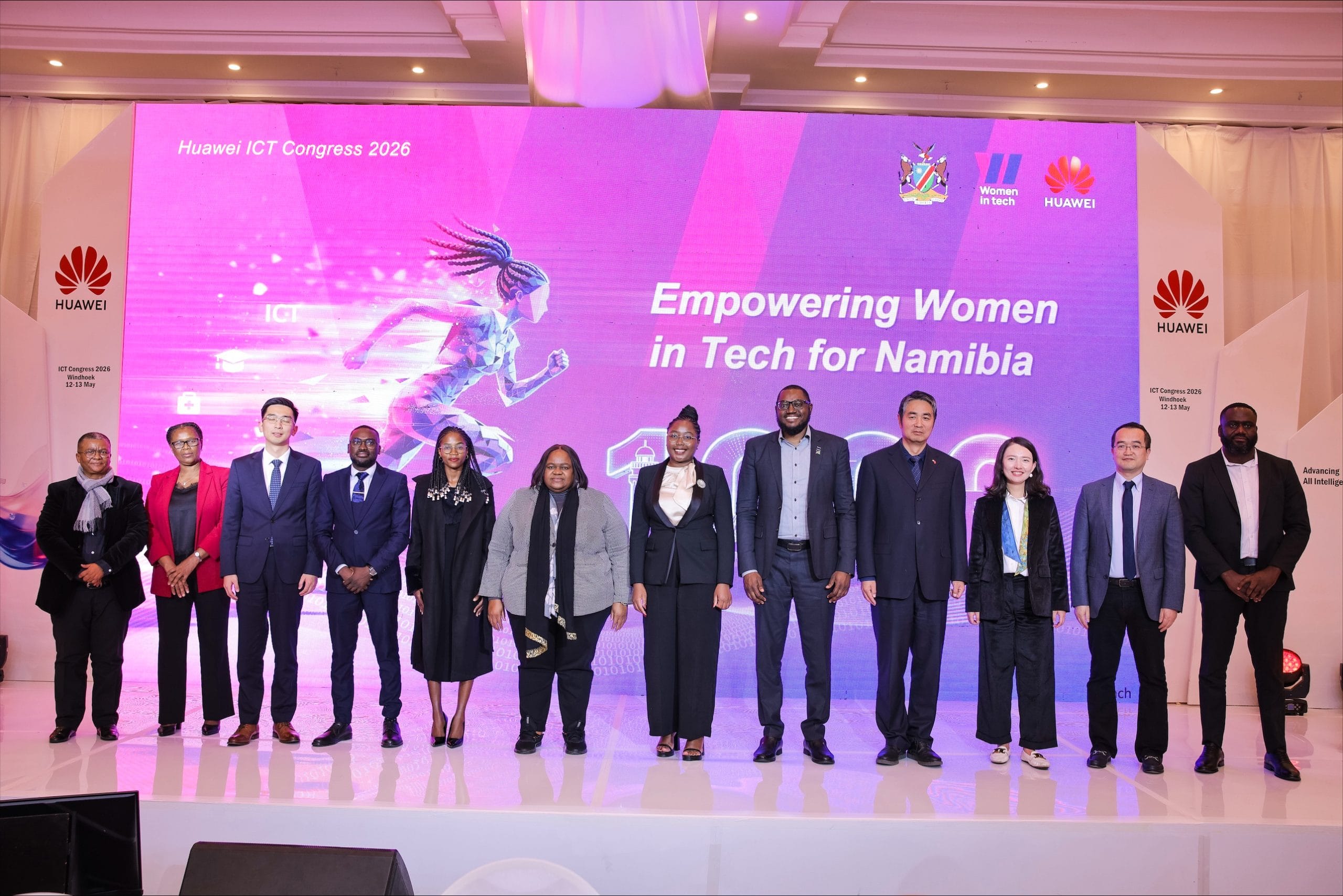
Artificial intelligence, cloud computing and data-driven technologies took center stage at the Huawei ICT Congress 2026 in Windhoek on May 13, held under the theme “Advancing All Intelligence” as Namibia sets out its digital transformation agenda.
The congress brought together government, academia, industry leaders, innovators and development partners to discuss the country’s digital priorities in line with its Sixth National Development Plan. Key discussions focused on smart infrastructure, digital skills, research capacity, inclusive innovation and economic competitiveness.
During the technical sessions, Huawei showcased smart campus ecosystems powered by Wi-Fi 7, optical networking, cloud platforms, high-performance computing and AI-enabled research environments. The discussions aligned closely with the research trajectory of the Namibia University of Science and Technology, particularly through its UNESCO Chair on Secure High-Performance Computing for Higher Education and Research, which supports research, training, collaboration and the development of supercomputing capacity in Namibia.
The evening session placed strong emphasis on talent development. Hannah Han, vice president of Huawei’s Southern Africa Multi-Country Management Department, announced a five-year national talent cultivation programme aimed at strengthening Namibia’s digital workforce. The programme targets the training of 1,000 ICT learners, certification of 50 professional engineers, development of 200 women engineers, the expansion of Huawei ICT Academies with university partners, and women-focused technical training.
A key highlight was Yyeni AI, an AI-powered educational chatbot developed by young Namibian innovators Vitalis P. Haupindi and Lotto N. Nanghonda Jr. Incubated at the NUST Innovation Hub, Yyeni AI secured first place in Huawei’s global Tech4Good Competition, winning $100,000 in international prize funding. Designed as a smart study assistant, the chatbot provides learners with academic support, study guidance and accessible learning assistance.
The launch of the Women in Tech Namibia National Talent Cultivation Programme added a strong inclusion dimension to the congress, with Huawei and its partners committing to support the development of 1,000 women in technology over the next five years. Valerie Garises, director of technology, innovation and entrepreneurship at NUST, was among the strategic partners invited on stage to officially launch the programme — signalling the university’s role in advancing entrepreneurship, digital skills, technology commercialization and inclusive innovation.
The congress made clear that Namibia’s digital future will depend on more than technology — requiring research capacity, skilled people, strong partnerships and inclusive innovation. Through smart infrastructure, high-performance computing, youth-led AI solutions and women-centred digital skills development, Namibia’s digital future is being shaped through knowledge, partnership and purpose.