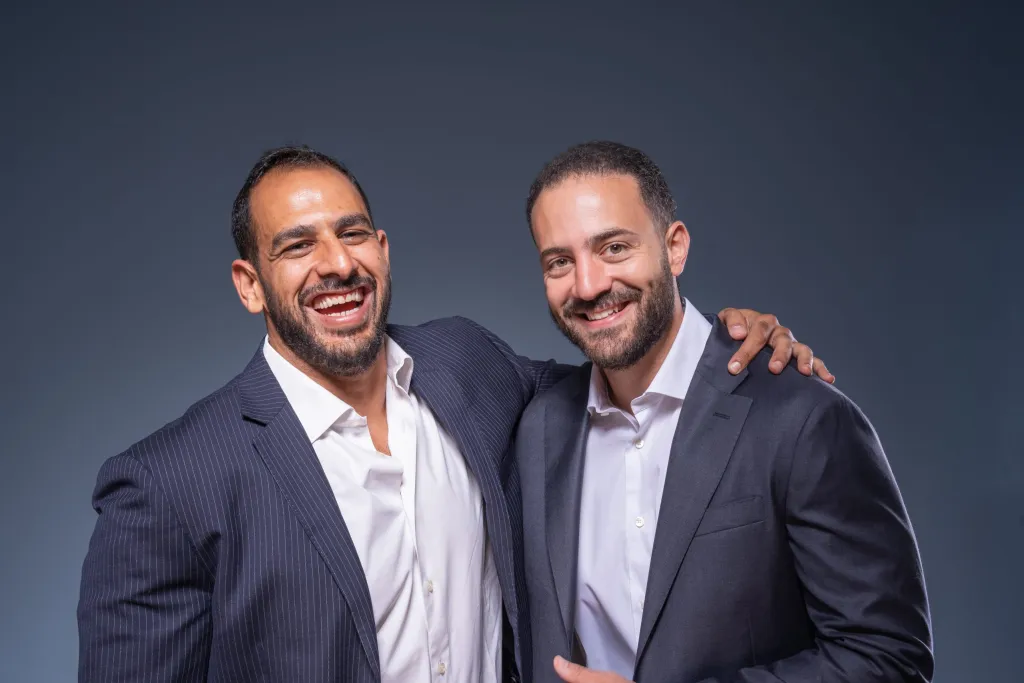
Egyptian AI company Synapse Analytics has raised $13 million in Series A funding led by Partech, in one of the largest disclosed AI rounds on the continent this year.
Algebra Ventures and Silicon Badia also participated. The round brings total funding to $17 million since the company was founded in 2018, following a $2 million raise in July 2024.
Founded by Ahmed Abaza and Galal Elbeshbishy, Synapse Analytics builds what it describes as an agentic decisioning platform, allowing regulated financial institutions to own and control their decisioning outright. Its architecture connects onboarding, credit scoring, fraud detection, anti-money laundering, collections, customer segmentation and customer value management across a single customer journey.
The company works with banks, non-banking financial institutions, fintechs and telecoms operators across the Middle East, Africa and Latin America. It says it has supported more than $200 million in lending and helped clients cut non-performing loans by up to 40%.
New capital will fund team expansion, product development and international growth, with expansion across the Gulf Cooperation Council and Africa already under way.
“Our mission is to give financial institutions the intelligence and decision infrastructure they need to make faster, more secure decisions to reduce risk, unlock growth and build stronger customer relationships,” Abaza said. Partech’s backing, he added, “gives us the backing of a leading global technology investor to pursue the next stage of that ambition.”
Lewam Kefela, a principal at Partech, said the firm was backing Synapse to build “the category-leading decisioning infrastructure for banks and financial institutions across the Middle East, Africa and Latin America.” Abaza, Elbeshbishy and their team, she said, “have the technical depth and execution to scale it.”
Selling ownership rather than a service
The pitch is aimed at a shift in how African regulators are treating automated lending decisions. A bank using a third-party scoring service effectively rents its credit judgment. One running its own decisioning layer owns the audit trail, the model logic and the ability to explain a rejection to a regulator.
That distinction is becoming a compliance question rather than a preference. Nigeria’s Artificial Intelligence Control and Regulation Bill, before the National Assembly, names credit scoring as a high-impact decision requiring disclosure of automated involvement and a route for individuals to challenge outcomes. The Central Bank of Nigeria has indicated regulated institutions will need AI-based compliance and real-time reporting systems within three years. South Africa’s Financial Sector Conduct Authority has recommended institutions build their own AI risk management frameworks, noting no uniform national standard exists.
Synapse occupies a distinct position in African AI-driven credit. Optasia, which listed on the JSE in November, processes more than 32 million credit decisions daily across 121 million users and has extended over $20 billion in small loans. Nigeria’s Mathesis Analytics raised strategic investment from Sewa Capital in August, having supported more than 8 million loans for over 2 million borrowers. Synapse sells neither lending nor scoring, but the infrastructure institutions use to decide for themselves.
A counterexample worth noting
The round lands against a market narrative of scarcity. Digital Africa chief executive Grégoire de Padirac said this month that AI-native companies took less than 2% of African startup funding in the first half of 2026, with only 190 startups raising at least $100,000 — the lowest count since 2021.
Synapse runs the other way, and the sequence is instructive. Seven years of operating history, a prior institutional round, $200 million in lending processed and a quantified client outcome preceded the capital rather than followed it.
It also adds a rare entry to Egypt’s National AI Strategy 2025-2030, which targets more than 250 AI companies by the end of the decade — one with a disclosed Series A and a named lead investor behind it.