Nigerian AI cloud infrastructure company Cencori and African voice AI startup Spitch have partnered to make text-to-speech and speech-to-text models for African languages available directly through the Cencori AI Gateway — a stack-level integration that lets developers pull Spitch’s voice capabilities through the same API and developer tooling they already use for other AI providers on the platform.
According to Cencori co-founder Daniel Oreofe, Spitch currently supports text-to-speech and speech-to-text capabilities across Yoruba, Hausa, Igbo, English and Amharic. Through the integration, developers can select a Spitch model inside Cencori without building or maintaining a separate provider integration for it.
The partnership is aimed at closing a gap Oreofe argued has become increasingly visible as African AI development accelerates: voice technology has improved sharply for English and a handful of globally supported languages, but many African languages remain poorly served by mainstream speech systems. That gap constrains the kinds of products developers can build for African users who communicate primarily through local languages or voice notes rather than typed English — a user base that is, on iAfrica’s own reporting, the majority of the continent’s mobile-first audience.
The example workflow Oreofe used to illustrate the integration is instructive. A developer building on Cencori could receive an incoming WhatsApp voice note in Yoruba, transcribe it to text via Spitch’s speech-to-text model, route the resulting text to an AI reasoning model, and return the generated response as a Yoruba voice message — all inside one application flow with a single provider gateway managing the routing. Potential applications identified by Cencori span customer support systems, interactive voice response platforms, financial-service applications, public-service tools, education products, accessibility systems and voice-first applications.
Because Spitch operates through the Cencori Gateway, requests use the same operational layer as other models on the platform — Cencori’s routing, security and monitoring infrastructure applies to Spitch calls the same way it does to text, image and document model calls the platform already supported. The integration therefore extends Cencori’s product from a text-and-document security layer into an infrastructure for voice-first applications built specifically for African users.
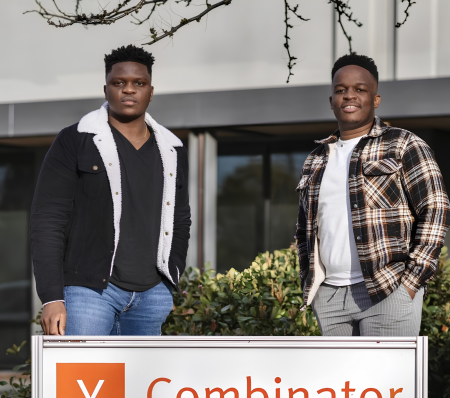
“Africa’s AI future cannot be text-only or English-only,” said Cencori founder and CEO Bola Banjo. Voice notes and local languages, he argued, are how a significant share of the continent actually communicates — and giving developers a way to build for that reality “without managing another fragmented integration” is the specific problem the partnership is trying to solve. For Spitch, the deal opens access to Cencori’s developer distribution and infrastructure layer; for Cencori, it adds locally relevant voice models to its growing catalogue of AI providers.
The integration lands inside an African voice-AI arms race that has visibly widened over the past year. Intron released its second-generation Sahara v2 speech recognition model in March, covering 24 African languages — including Hausa, Yoruba and Igbo — trained on 14 million audio clips from more than 40,000 African speakers, and outperforming several leading global models on African-name and accent benchmarks. Google’s WAXAL open-access speech dataset now covers 21 sub-Saharan languages with more than 1,250 hours of transcribed speech. The Gates Foundation-backed African Next Voices dataset recorded 9,000 hours of speech across 18 African languages. Nigeria’s own state-backed N-ATLAS model launched in September 2025 with automatic speech recognition for Yoruba, Hausa, Igbo and Nigerian-accented English. South African startup Untapped AI is building voice automation optimised for local accents and 11 official languages, and UCT’s MzansiLM has released the first publicly available language model trained on all 11 South African official written languages.
Cencori’s positioning inside that landscape is distinct. Where Intron, Spitch, Untapped AI and N-ATLAS build the voice models themselves, Cencori is building the developer infrastructure layer — the gateway that sits between application code and the models — and now bundling African voice AI into that layer. Its April launch positioned the platform as “the Cloudflare for AI production” in Oreofe’s framing; the Spitch integration extends that gateway proposition from text and documents into voice. For African developers building voice-first applications for local language users, the practical outcome is one fewer fragmentation problem to manage — one API surface rather than several, one operational layer rather than several, and native support for the languages African users actually speak.
The wider strategic dimension is the one iAfrica has been tracking in its Sovereign AI and language coverage: whether African AI infrastructure develops as a set of independent local companies serving local users through local infrastructure, or whether it develops as a set of local companies serving as thin wrappers on top of foreign-hosted models. The Cencori-Spitch partnership is one of the clearer examples of the first pattern — two African AI companies integrating to serve African developers, with the underlying language models and gateway both built locally.