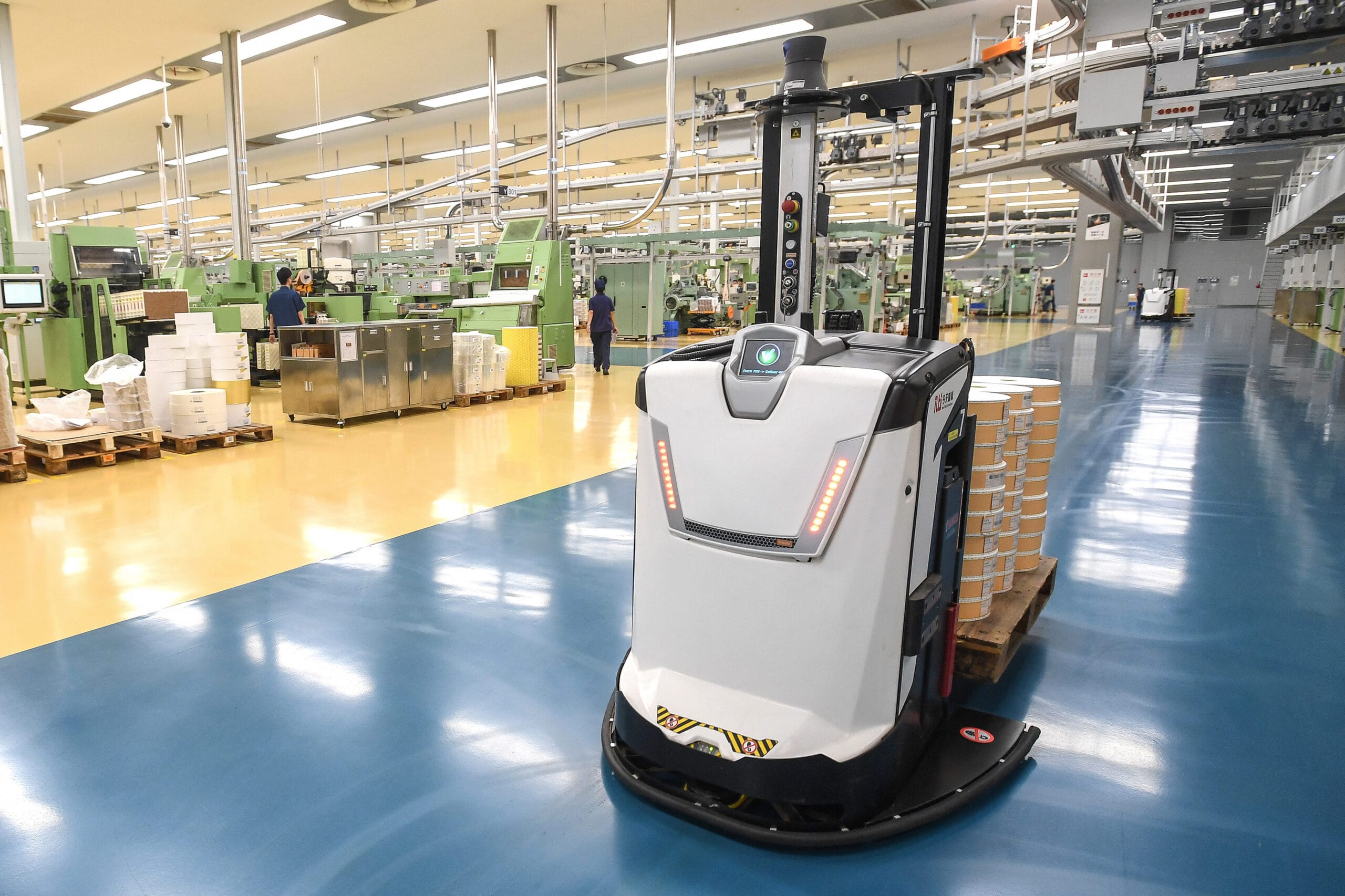
In 2034, it will be cheaper to produce a garment with a robot and 3D printing in the United States than to have tens of people make the same item in Kenya.
That is the estimate of Dirk Willem te Velde, principal research fellow and director of the International Economic Development Group at ODI, and it puts a date on the expiry of the advantage that underwrites most African industrial strategy.
The model that is running out
Textiles have been the standard entry point to industrialisation because barriers are low and labour is cheap. The International Finance Corporation describes how the Asian Tiger economies “rebuilt and reimagined their postwar economies by mobilising colossal numbers of low-skilled and low-paid textile workers,” then converted that industry-building knowledge into the most complex manufacturing region in the world.
African countries have been trying to follow. Benin’s sovereign wealth fund and Dubai-based Arise Integrated Industrial Platforms committed €550 million ($633 million) in 2024 to processing cotton domestically rather than exporting it raw and forfeiting more than 90% of the value. Ethiopia built textile-focused industrial parks on the same logic.
Te Velde’s arithmetic is that the window closes. “Advances in technology mean it is cheaper and cheaper to produce a robot — and therefore cheaper for a robot to produce manufactured goods. At the same time, the cost of labour tends to go up. At some point there is an intersection.”
That intersection is not hypothetical. Prosus published a position paper this month estimating that genuinely useful general-purpose robots will cost around $20,000 within a few years, with hardware prices falling partly on the back of China’s electric vehicle supply chain.
Where the leapfrog line actually falls
Kennedy Chengeta, an AI entrepreneur and academic based in Pretoria, is more optimistic — and considerably more precise than most people making the leapfrog argument.
“Nothing about artificial intelligence replaces a press, a kiln, a berth or a substation. You cannot leapfrog a foundry with a language model,” he says. “What you can leapfrog is the systems layer above production.”
That is a useful correction to a claim iAfrica examined last week, when AWS sub-Saharan Africa head Jyoti Ball invoked mobile money as precedent for AI leapfrogging. Mobile money skipped bank branches by running over mobile networks that already existed. Chengeta identifies exactly which layer is skippable and which is not.
His second argument concerns legacy. “Most African manufacturers carry no legacy IT estate, which means a processor still running paper job cards can move directly to cloud-native, AI-native operations without the twenty-year migration debt a European mid-cap is still servicing. Having nothing is an asset exactly once, and this is that moment.”
The third is about scale. “Industrial engineering talent used to require a large plant to amortise it. Predictive scheduling, quality modelling, and maintenance optimisation now let much smaller operations achieve yields that previously demanded scale — and let networks of small producers be coordinated as a single virtual firm.”
One claim worth testing
The no-legacy-estate argument is attractive, and it should be weighed against the Everest Group and Capgemini Engineering findings iAfrica covered this month.
That research found more than 75% of industrial AI pilots never reach large-scale deployment, and over 80% of manufacturers cannot extend AI beyond isolated use cases. The cause is not weak algorithms but architecture: IT systems and operational technology running separately, with data poorly connected or arriving too late to support decisions.
Greenfield removes migration debt. It does not supply architecture. A factory running paper job cards has nothing to migrate and nothing to build on — and the report’s prescription is to build data infrastructure first and applications second, which requires expertise rather than the absence of legacy.
PwC found more than 85% of South African mining respondents rating their data management average or poor, in a sector with considerably more capital than African textiles.
Divergence, not deficit
Te Velde’s concern is comparative rather than absolute.
“While the impact of AI and internet penetration is positive in Africa, it is more positive in other countries,” he says. “The same level of internet penetration helps non-African countries faster than African countries, so you get divergence.”
Robotisation compounds it. “The introduction of robots into manufacturing is happening much faster in countries such as China and South Korea. Advanced economies are increasingly able to produce the same amount of manufacturing output with fewer people, with more AI, and therefore you need less manufacturing output in poorer countries.”
His warning is specific: “There is a potential threat that Africa could lose out: that all the AI-powered manufacturing stays in richer countries and that another rung of the ladder is kicked away for African manufacturing.”
That framing matters because it inverts the usual question. Africa adopting AI faster does not close the gap if everyone else adopts it faster still.
Power first
Both men land on electricity.
Chengeta cites Nigerian government figures putting manufacturers’ losses to power outages at around $27 billion a year. “South Africa’s version of the problem is tariff escalation and load management rather than outright failure, but the conclusion is identical.”
Milken Institute research covered by iAfrica found sub-Saharan manufacturers experiencing roughly 14 hours of outages monthly and losing around 5% of annual sales to them. An AI-enabled factory is more power-dependent than a manual one, not less.
Skills are the second constraint. More than 60% of Africa’s population is under 25, but te Velde argues the workforce advantage only converts with training. “We need to harness AI and digitalisation for African manufacturers, because if governments do nothing and leave it up to the market, then Africa could miss the boat again.”
“Business as usual is not enough,” he says. “We’re only at the start of the fourth industrial revolution but Africa needs a more targeted approach.”
Eight years is not long to build power systems, data architecture and industrial engineering capability at once. It is, however, a deadline — which is more than most industrial strategy documents provide.