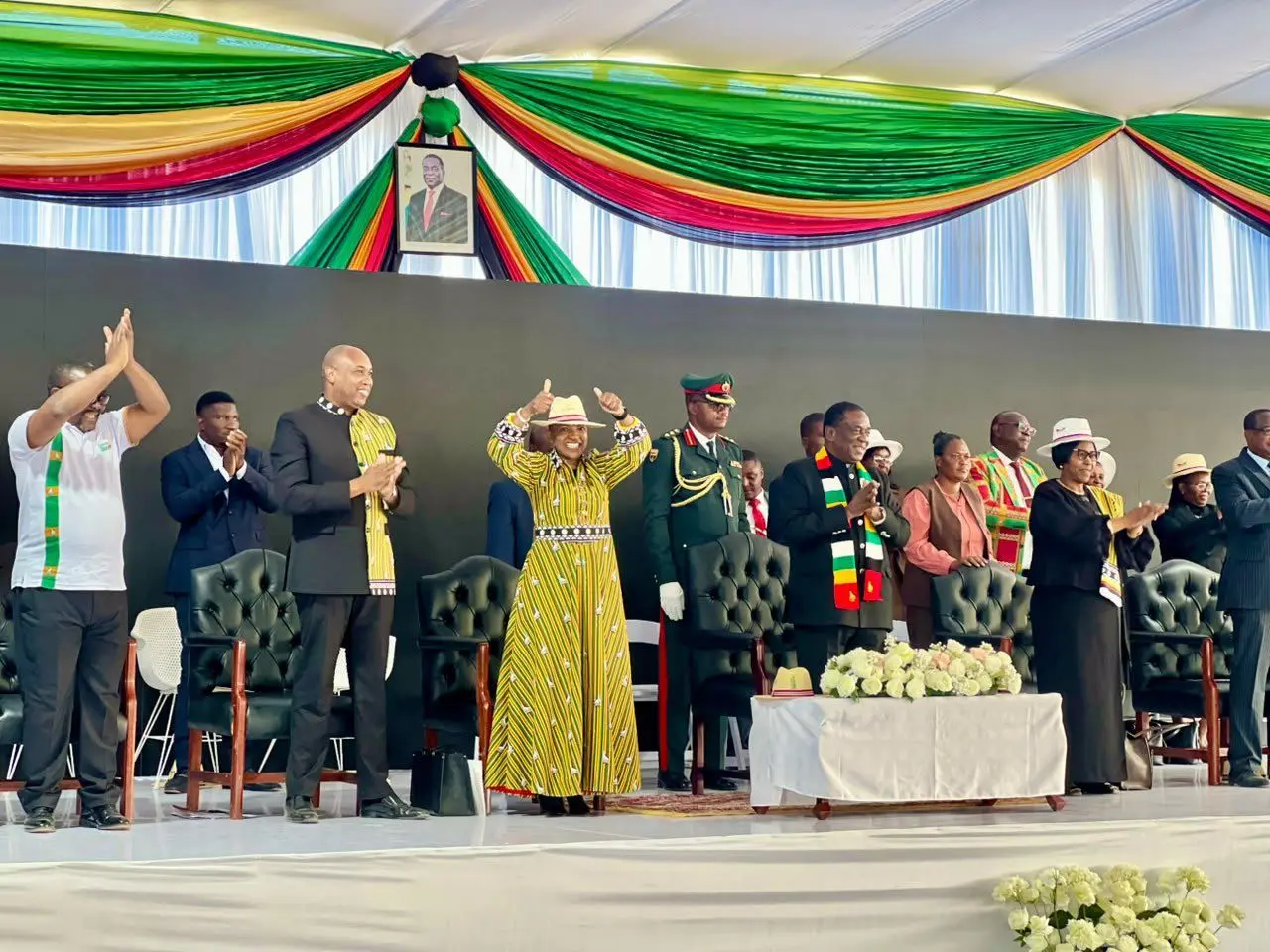
Zimbabwe has placed artificial intelligence at the centre of its tourism strategy, with President Emmerson Mnangagwa opening the 19th Sanganai/Hlanganani Dzimbahwe World Tourism Expo in Masvingo under the theme “Digital Agenda and Artificial Intelligence to Redesign Tourism.”
The expo’s stated ambitions for AI cover destination visibility, visitor experience, tourist flow management, demand forecasting, overcrowding reduction and environmental monitoring — while preserving Zimbabwean and African cultural values.
The numbers behind the pitch
The tourism figures are more concrete than the technology ones.
Tourism investment rose 229% to US$132.3 million in the first half of 2026, from US$40.2 million in the same period of 2025. Domestic tourism grew from 5 million to 6.4 million visitors over the same period. The Creative Cultural Industries contributed 8.8% of GDP.
Tourism is positioned as a growing pillar of economic transformation under the second National Development Strategy and Vision 2030.
Heritage first
The deliberate addition of “Dzimbahwe” to the expo’s name places Great Zimbabwe at the centre of the tourism agenda, signalling that the country’s appeal extends beyond wildlife and Victoria Falls to history, culture, indigenous knowledge, music, cuisine and arts.
Mnangagwa described the Great Zimbabwe Monuments as testament to the ingenuity and organisational sophistication of the country’s forefathers, and called for that heritage to be converted into contemporary tourism experiences.
He urged greater support for the Nhaka Yedu/Ilifa Lethu domestic tourism campaign, encouraging Zimbabweans at home and in the diaspora to travel domestically, and linked tourism development to the government’s devolution agenda — arguing that rotating the expo between provinces spreads investment, infrastructure, employment and business opportunity.
For Masvingo specifically, he called for a more interconnected tourism economy built around Great Zimbabwe, Lake Mutirikwi, Tugwi-Mukosi, Manyuchi Dam and Gonarezhou, linked through a wider corridor of cultural, heritage and conservation destinations.
What a working version looks like
The applications listed are plausible and the sector has adopted them elsewhere. What the expo has not disclosed is what Zimbabwe is actually building, with whom, or when.
South African Tourism offers the nearest regional comparison. It launched Siyanda, an AI-powered travel assistant providing personalised recommendations, in a market where online travel is projected to more than double by 2033 — with AI reshaping how travellers plan, book and experience trips, including sustainability filters highlighting community-run accommodation and heritage lodges.
Zimbabwe has the institutional架 to support something similar. Its National AI Strategy 2026-2030, launched by Mnangagwa in March, rests on six pillars and includes Project Pangolin, a national AI and data platform intended to provide sovereign computing infrastructure and national datasets, plus the Mugove/Umqele/Isabelo Fund to co-invest in certified AI startups. POTRAZ opened an AI for Impact Challenge in July offering up to $80,000 across data, design and deployment tracks.
Whether tourism becomes one of the use cases those instruments fund is the question the expo leaves open.
The cultural values clause
The commitment to deploy AI “while preserving Zimbabwean and African cultural values” carries more weight at this particular site than the phrasing suggests.
Great Zimbabwe spent decades misattributed in colonial-era scholarship, and that literature sits in the corpora on which general-purpose models were trained. A system generating visitor content about the monuments draws on a body of writing that got them wrong.
That is the concern University of Johannesburg vice-chancellor Professor Letlhokwa Mpedi has pressed in arguing for an “AI equivalent of geographical indication” to protect African cultural provenance before it is absorbed and monetised elsewhere. Zimbabwe’s own Nhimbe Trust won UNESCO backing in July for Fearless Frontiers, a Southern African project on AI ethics and artistic freedom — domestic expertise already funded to think about exactly this.
Zimbabwe’s National AI Strategy is explicitly rooted in Ubuntu philosophy and sovereign data principles. Applying that to heritage interpretation would mean training on Zimbabwean scholarship rather than translating international models into local use.
Mnangagwa closed by urging local authorities to support tourism development and calling for stronger people-to-people exchange, trade and regional integration.