Zambia and China have opened talks on deeper AI cooperation spanning infrastructure, skills and locally tailored applications — with senior Zambian officials using the occasion to set explicit conditions about sovereignty and national context.
The seminar brought together government, academia and industry to discuss digital infrastructure, Zambia-specific AI applications, local skills, computing capacity and inclusive governance. China pledged 5,000 training opportunities.
Zambia sets terms
The most striking element was how directly Zambian officials framed the limits of the partnership.
SMART Zambia National Coordinator Percy Chinyama warned against adopting models built for mature environments without regard to Zambian circumstances, capabilities and culture. Zambia, he said, must understand where it is, decide where it wants to go, and build a pathway reflecting its own identity.
He called for safeguarding regulatory sovereignty and ethical alignment, arguing that AI governance, standards and compliance requirements should respond to Zambia’s circumstances — and that cooperation “should support Zambia’s sovereignty rather than impose a one-size-fits-all approach.” On data, he cautioned that localised datasets must serve modernisation without eroding cultural identity or national interests, noting that poor-quality data produces poor AI outcomes.
Permanent Secretary in the Ministry of Technology and Science, Dr Brilliant Habeenzu, made a related point: Zambia should not approach AI development “as though it were starting from zero.” Cooperation, he argued, should build on existing national capabilities rather than substitute for them.
That posture is consistent with an approach Zambia has taken elsewhere. When the country consolidated 12 million patient records into its SmartCare Pro platform, Chinyama emphasised that Zambia had deliberately retained full national ownership of its health data and avoided dependence on external vendors.
Strategy review coming
Habeenzu disclosed that Zambia’s AI strategy is approaching the end of its current cycle and will require review. The country must move fast enough to avoid falling behind, he said, while ensuring the renewed strategy reflects national realities and development needs.
He identified limited computing infrastructure, data quality and interoperable standards as the main barriers to adoption, and welcomed the emphasis on open-source technologies as adaptable to local conditions. He also flagged the need to review legislation including data protection frameworks so that law keeps pace with responsible AI development.
Priority sectors for cooperation, he said, are agriculture, mining and manufacturing, alongside health and education.
China’s four proposals
Chinese Ambassador Han Jing set out four areas for deeper cooperation.
On infrastructure, he pointed to reliable power, communication networks, computing capacity and data centres, noting that China’s involvement in Zambia’s energy sector — including major solar projects — provides a foundation for AI workloads. He said China is ready to support 5G expansion and energy-efficient local computing hubs.
On applications, he cited the smart village initiative, which combines connectivity, solar systems and smart classrooms to address rural digital gaps, as a model extendable into agriculture, healthcare and resource development.
On talent, he identified the shortage of skilled digital professionals as a major constraint and proposed joint laboratories, AI training bases and innovation centres between Chinese and Zambian universities, supported by shared curricula and online learning resources.
On governance, he called for coordination to safeguard developing-country interests, advocating a system that respects data sovereignty and digital security, with China and Zambia amplifying the Global South’s voice in international AI norms.
The WAICO question
Habeenzu framed Zambia’s participation in the 2026 World Artificial Intelligence Conference and its role in establishing the World Artificial Intelligence Cooperation Organization as evidence of commitment to international cooperation, particularly on bridging the AI divide for the Global South. Han Jing described WAICO as a platform for expanding technology access and strengthening South-South cooperation, and said founding membership lets both countries translate longstanding ties into project-based work.
The contrast with South Africa is instructive. Both countries are WAICO founding members, but communications minister Solly Malatsi told TechCentral this month that South Africa’s membership “carries no binding commitment on technology standards or procurement,” insisting the country would not align its technology choices with any geopolitical camp. Zambia’s officials are engaging the framework considerably more warmly while attaching their own sovereignty caveats.
Existing groundwork
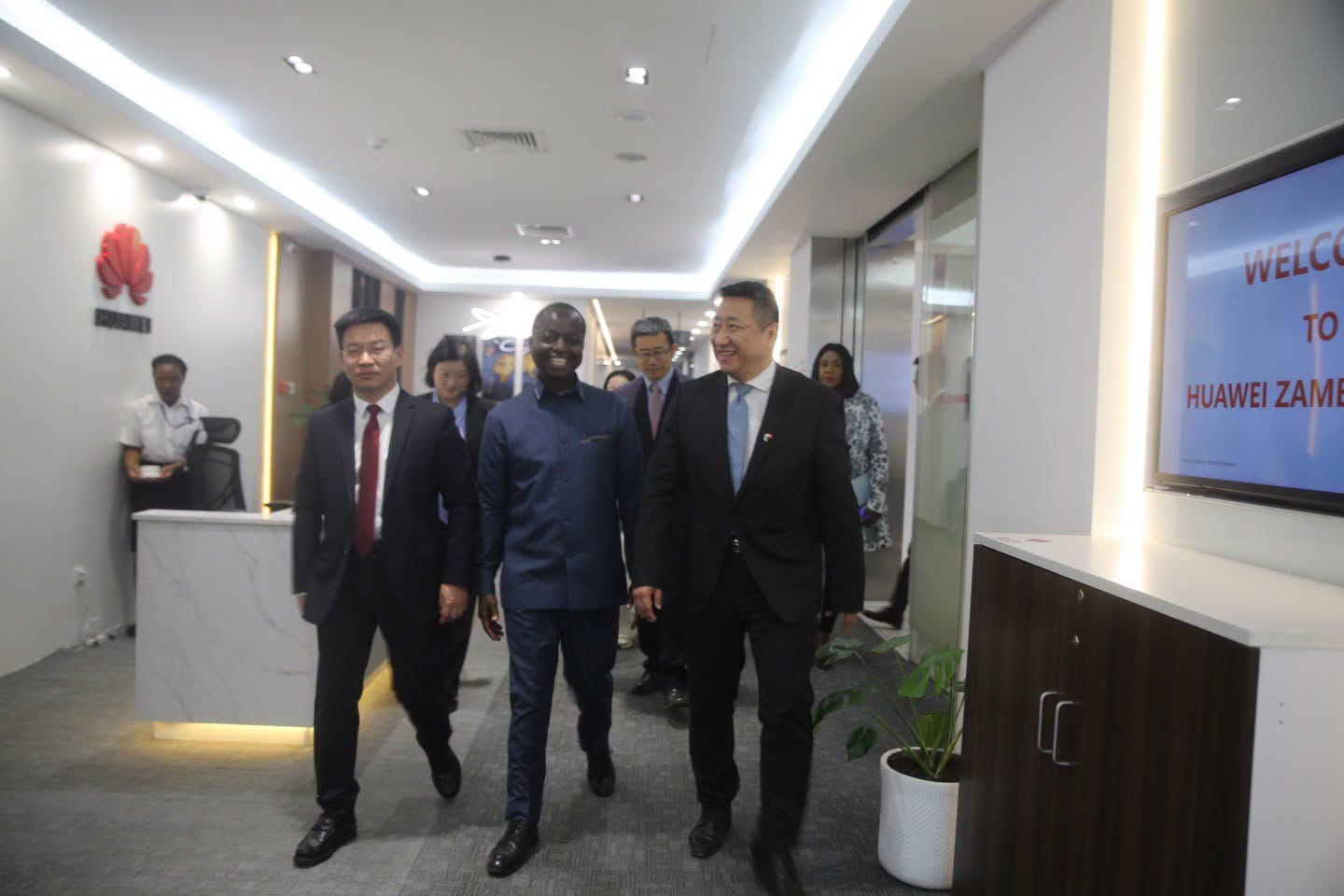
The seminar builds on substantial cooperation already in place. SMART Zambia signed a memorandum with Huawei in May to develop a National AI Data Centre and train 5,000 ICT professionals by 2028 through Huawei’s Global Academy. Zambia and China co-chair the UN Group of Friends for AI Capacity-Building, where Zambian permanent representative Chola Milambo has argued developing countries must shape AI deployment rather than simply receive it.
Habeenzu also outlined domestic progress: strengthened cybersecurity legislation, expanded fibre-optic links, growth in mobile money, and a push to migrate citizens from 2G and 3G to 4G and 5G.
Chinyama closed with a plea for tangible results. Citing a child who gained access to a smartphone and went on to develop strong programming ability, he argued that expanding access to digital tools could act as a genuine equaliser — and that the public must be able to see benefits from AI rather than only hear officials describe its importance.