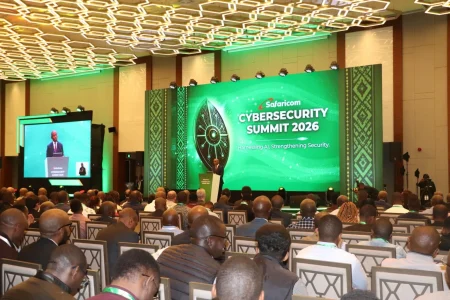
Huawei has launched a Partner Joint Industry Solution with four of South Africa’s largest IT services companies — CoCre8 Technology Solutions, Gijima, Altron and BCX — at Huawei South Africa Connect 2026 in Sandton, formalising a partner-ecosystem play the Chinese ICT vendor plans to extend as its template for African expansion.
Huawei said its local partner ecosystem now includes more than 1,400 South African companies, and accounts for 94.7% of its local revenue and more than 90% of delivery and service work. The four partner-specific projects announced at the event give the ecosystem’s positioning some texture: a digital twin project with BCX, smart retail with Altron, connected healthcare with Gijima, and paperless government solutions with CoCre8. The mix pairs Huawei’s global ICT stack with local delivery capacity that iAfrica has previously covered in each partner’s own AI push — including Altron’s Nvidia-powered AI Factory launch in October and its earlier Huawei-partnered contact centre solution.
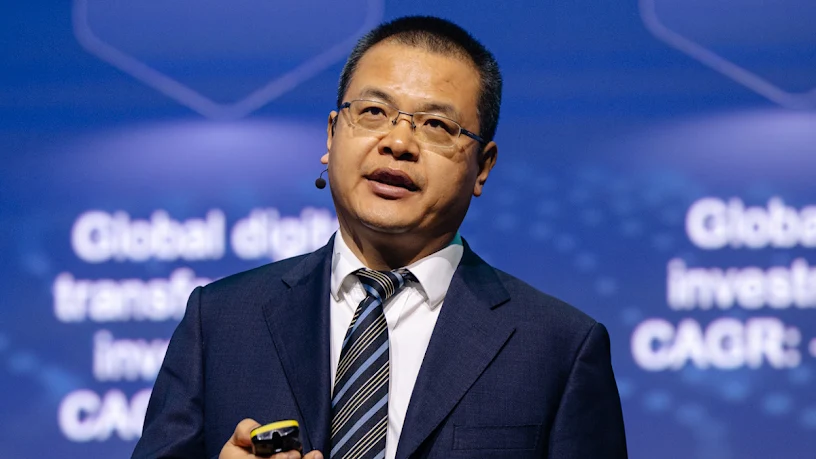
Lucas Xia, director of enterprise partner development and management at Huawei Sub-Saharan Africa, framed the ecosystem’s growth in the language of “innovation, capability and opportunity” — the three-pronged support model Huawei uses to describe its partner-development strategy. The partnership approach, Xia said, has been delivering solutions across industries in South Africa, and the four projects unveiled at the event are the visible operating layer of that argument.
Will Meng, chief executive of Huawei South Africa, tied the announcement to South Africa’s positioning at the World Artificial Intelligence Conference in Shanghai, where the country joined the newly established World AI Cooperation Organisation as a founding member in July. Meng outlined what he described as a three-stage path to AI readiness — informatization builds connectivity, digitalization enables data use, and intelligence creates new economic value — and argued that large-scale AI deployment depends on strong digital infrastructure across networks, data and industry digitalization. The framing is closely aligned with Huawei’s own commercial proposition, which is to sell the underlying network, data and compute layer that customers then operationalize into AI-driven use cases.
Meng’s readiness framework lands in a South African AI conversation where iAfrica has been documenting the gap between AI ambition and structural readiness in detail. Data governance, skills development and regulatory clarity remain persistent constraints on domestic AI adoption — challenges Huawei is explicitly betting the partner-ecosystem model can help address by combining global ICT capabilities with local implementation depth.
Nicholas Ma, corporate vice president and president of global government and enterprise key accounts at Huawei, introduced the company’s ACT framework — an approach designed to move enterprise AI adoption beyond pilot phase. ACT evaluates high-value use cases before organizations train AI models on industry data, and Huawei says the approach has identified more than 1,000 production scenarios globally, backed by a developer ecosystem of more than four million participants. The framework fits within a broader pattern of global technology vendors — including Microsoft with MDASH, Salesforce with Agentforce, Google Cloud with Gemini for Enterprise, and Anthropic through its enterprise programmes — building structured pathways for enterprise AI adoption in emerging markets, rather than leaving customers to work out how to move from pilot to production themselves.
The South African deployment is not the end state Huawei is positioning for. The company has applied the same Partner Joint Industry Solution model in markets including France, the Philippines and Saudi Arabia, and said South Africa is expected to serve as a pilot for expanding the approach across Africa — working with local partners in each market to develop industry-focused solutions and explore regional opportunities.
The strategic dimension the announcement sharpens is one iAfrica has been tracking through its Huawei coverage arc for the past year. In July 2025 at the previous Huawei South Africa Connect event, then-Huawei Enterprise CEO Gene Zhang reiterated the company’s commitment to training 50,000 ICT professionals in South Africa by 2028 as part of a broader ICT capacity build-out. Huawei then hosted the seventh annual ICT Editors Xchange in Johannesburg in July 2026 under the theme “Africa’s Intelligence, Africa’s Terms” — an event whose framing directly echoes the sovereignty debates iAfrica has covered across the Lawyers Hub / AFD “Digital Silk Road” report, Prof. Mpedi’s “Digital Berlin Conference” argument, and Justice Minister Mmamoloko Kubayi’s warning against foreign-data-trained AI producing “digitised racial segregation.”
The Partner Joint Industry Solution launched this week is the operational commercial layer of the same Huawei positioning: extending its infrastructure footprint into the applied AI layer through partnerships with South Africa’s largest IT services firms, with the stated intent of using South Africa as the template for pan-African rollout. Whether that positioning delivers durable operational AI capability for the four partners — or reproduces the same infrastructure-dependence pattern that Africa’s four largest tech-economy AI strategies have flagged as a strategic risk — will be the more meaningful measure of the collaboration’s African impact over the next several years.