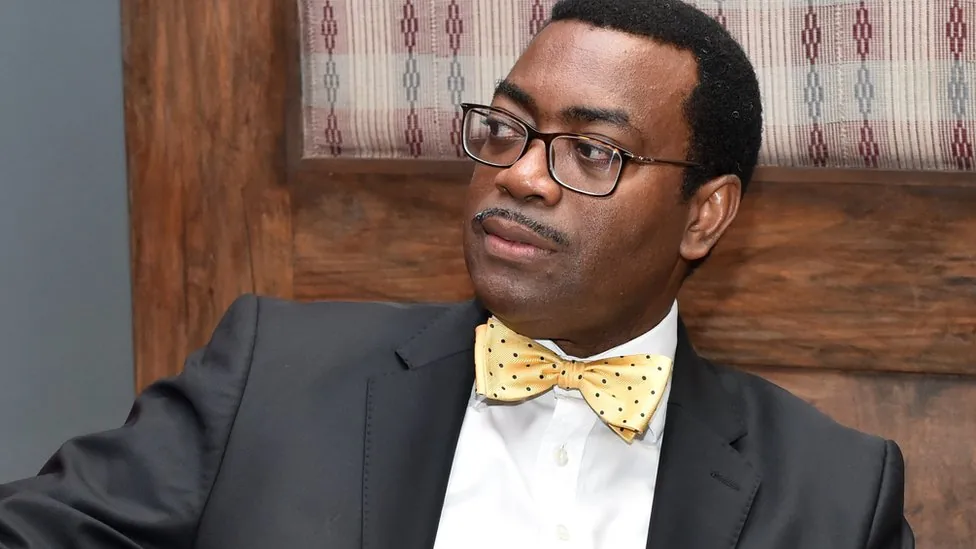
Former African Development Bank president Akinwumi Adesina has proposed a $10 billion Africa AI Frontier Technology Fund to anchor a wider $50 billion investment drive over the next decade, urging the continent to lead the AI revolution rather than consume foreign technology.
“Africa must approach the AI revolution as a continent determined not to follow, but to lead,” Adesina said in a keynote at the Oxford Global Think Tank’s 2026 Leadership Conference in Abuja.
The proposal is separate from the AfDB and UNDP’s AI 10 Billion Initiative launched in February. No backers or structure for Adesina’s fund were announced.
A five-point plan
Warning that the global AI race will shape future economic power, Adesina said a continent heading for 2.5 billion people by 2050 cannot depend on technology built elsewhere. He set out five priorities:
- capturing more of AI’s economic value in Africa;
- investing heavily in digital and energy infrastructure;
- shifting from adopting technology to creating it;
- mobilising large-scale institutional capital;
- strengthening political leadership — including, he suggested, appointing dedicated AI ministers.
He called for a coalition of the World Bank, the AfDB, African governments and private technology partners, and said Africa’s young population should become a “demographic asset class” able to invent, commercialise and export advanced technology.
Nigeria’s pitch
Speaking earlier, Nigeria’s Communications Minister Bosun Tijani pointed to the country’s 2001 telecoms liberalisation as a historic driver of growth and outlined current investments in national “absorptive capacity”: a planned 90,000km open-access fibre network, a programme to train three million technical workers, a government-backed large language model, and a national AI strategy.
He said those investments have put Nigeria first in Africa for responsible AI governance.
The conference, hosted by the Oxford Global Think Tank founded by Arunma Oteh, also launched an AI report and an AI Virtual Centre.
Based on reporting by Daily Trust.