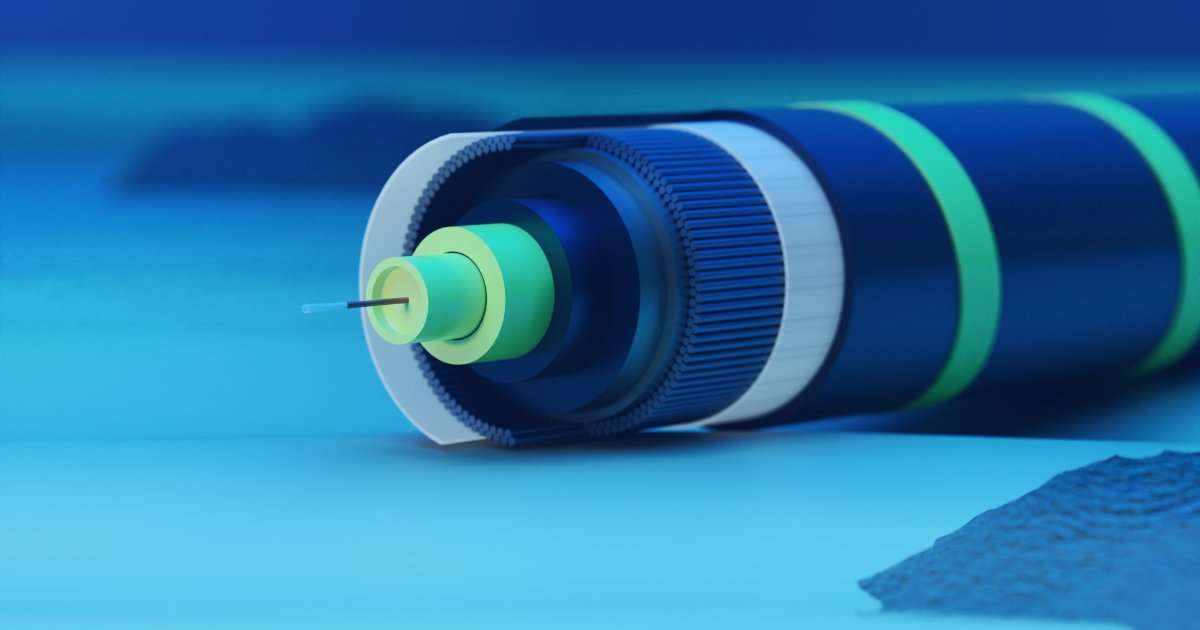
Openserve is adding AI and machine learning to its network operations centre to detect threats to fibre cables before they cause outages, as Telkom’s wholesale arm moves toward more autonomous network management.
The core technique is fibre sensing: the network learns over time what normal vibration around a cable route looks like, and flags anything unusual.
“So, we know that if a car is going over the bridge and a fibre vibrates in a certain way it’s normal traffic. The system learns that over time if someone’s digging with a spade, it sends a very different type of sonar wave to alert us,” said Dr Sunil Piyarlall, Openserve’s executive for network architecture and modelling, speaking at Digital Council Africa’s Conext 2026.
“And that’s AI starting to work, and then it would alert you and say we suspect something is happening at that point, please go have a look, and that is how we do preventative maintenance.”
Self-healing, up to a point
The operations centre monitors Openserve’s terrestrial fibre, subsea cable connections and satellite services — millions of network elements, down to temperature conditions at exchanges. More than 3,000 technicians handle installations and repairs.
When a fibre route fails, traffic reroutes automatically. “As soon as a fibre breaks, that traffic is automatically routed onto another” route, Piyarlall said, while teams are dispatched to fix it.
That resilience depends on spare capacity. In 2025, a break in the Western Cape was followed by a second in the Free State while crews were still responding to the first in an area that needed security support. With two routes down, the third couldn’t carry the full load. Openserve has since upgraded its national transport network.
Legacy first
Piyarlall said making AI work depends on modernising old infrastructure so equipment can talk to each other. Openserve is decommissioning much of its copper network and exchanges, and has begun running its technicians’ and specialists’ processes through machine learning.
Underground fibre lasts 20 to 30 years, he noted, but the equipment around it changes far more often.
Scale
Openserve’s network spans more than 190,000km, with fibre infrastructure in every municipality and a potential reach of eight million locations within 5km of its fibre-ready nodes. It has 34 internet breakout points, access to three subsea cables and four international routes, with a fifth via Brazil in development.
It has deployed 10Gbps passive optical network technology and tested 50Gbps near Kruger National Park.
In the quarter to 30 June 2026, Openserve revenue rose 5.6% to R3.32 billion and EBITDA 6.7% to R1.10 billion, according to Telkom.
“The immediate focus remains on modernising infrastructure, using machine learning to identify potential faults and improving the ability to maintain connectivity before incidents affect customers,” Piyarlall said.