
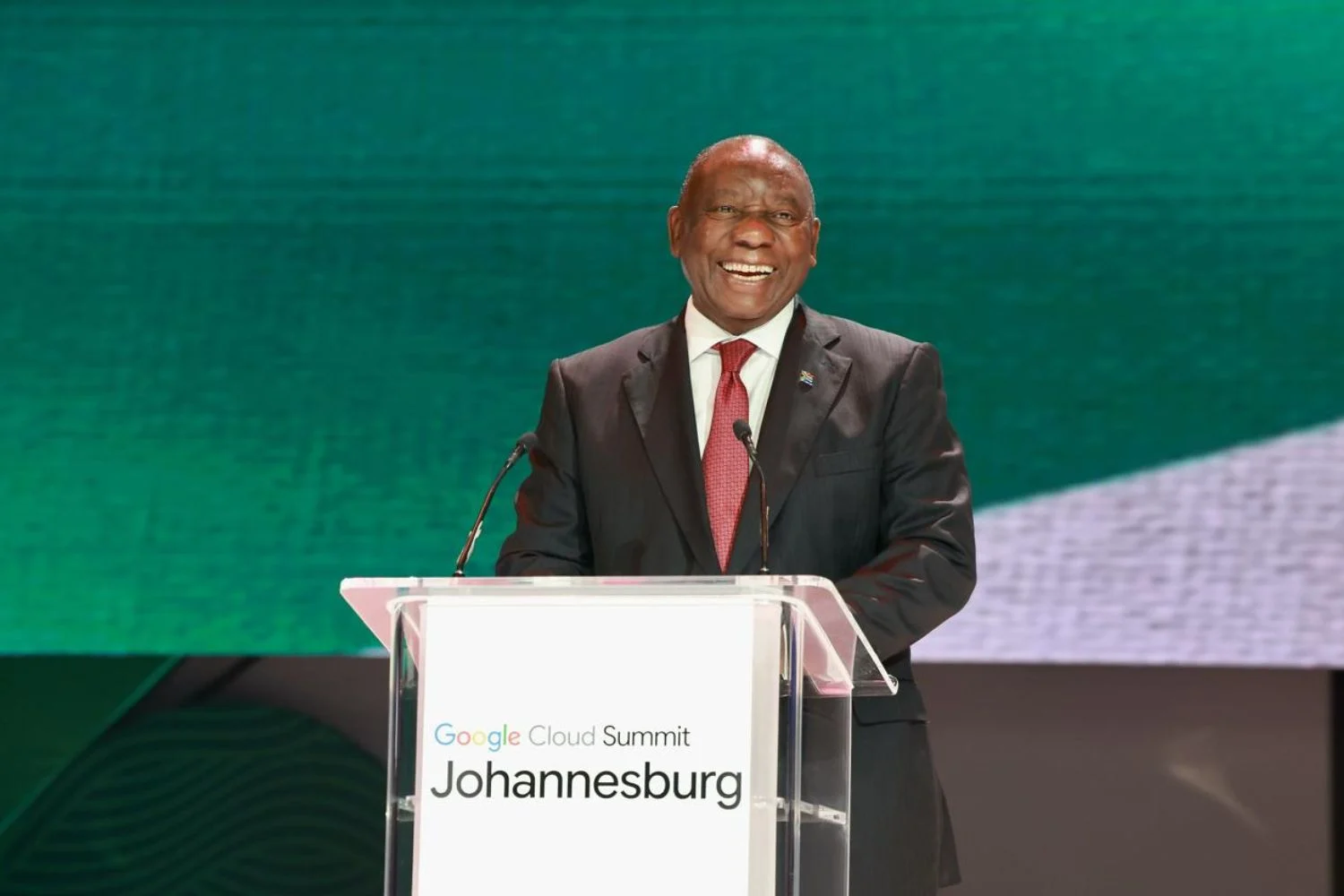
President Cyril Ramaphosa says he will lead a delegation of government officials, academics, business leaders and young South Africans to Silicon Valley after the local government elections, to meet leading AI developers and understand how the technology can be used for the country’s benefit.
“After the elections, I will be leading a group of people from government, from universities, young people and all, and business, and will take along some of my comrades as well to Silicon Valley, just to go and meet those big moguls of artificial intelligence, to get to understand exactly how it functions and how we can utilise it to our own benefit,” Ramaphosa said at the Black Wednesday commemoration lunch on Monday.
No date, itinerary or list of companies has been announced. Several prominent figures in the US technology industry have South African connections, including Elon Musk, David Sacks and Peter Thiel.
Opportunity in a multilingual country
Ramaphosa said countries worldwide are grappling with AI’s rapid advance and its growing influence on the economy and public life. For South Africa, he said, it offers significant opportunities in sectors built on information processing, research and communication.
AI could help journalists analyse large volumes of information, identify trends, translate content and widen access to information — capabilities he said could be especially valuable in South Africa’s multilingual environment.
‘Many people believed it’
He also warned that AI-generated images, recordings and videos are becoming convincing enough to shape public perception before anyone verifies them.
Ramaphosa described a manipulated image that circulated on social media showing him and Deputy President Paul Mashatile lying side by side in a hospital ward. “And they put us in a hospital ward, lying next to each other, and many people believed it, and many concluded there is no leadership in South Africa,” he said.
“A fabricated report, a recording rather, can spread across social media before journalists have had an opportunity to check it and establish it as truth.”
With South Africans voting in the local government elections on 4 November, he cautioned that AI-generated disinformation could affect public discourse and confidence in democratic processes, and said that made credible journalism more important.
“Technology may change how information is produced and distributed, but it does not diminish the importance of truth, of accuracy, fairness and accountability,” he said.
Ahead of the elections, TikTok has launched an in-app Election Centre developed with the Electoral Commission of South Africa to direct users to reliable information.
Ramaphosa also condemned intimidation and online harassment of journalists. “No journalist should ever have to fear for their safety because they are doing their job,” he said.