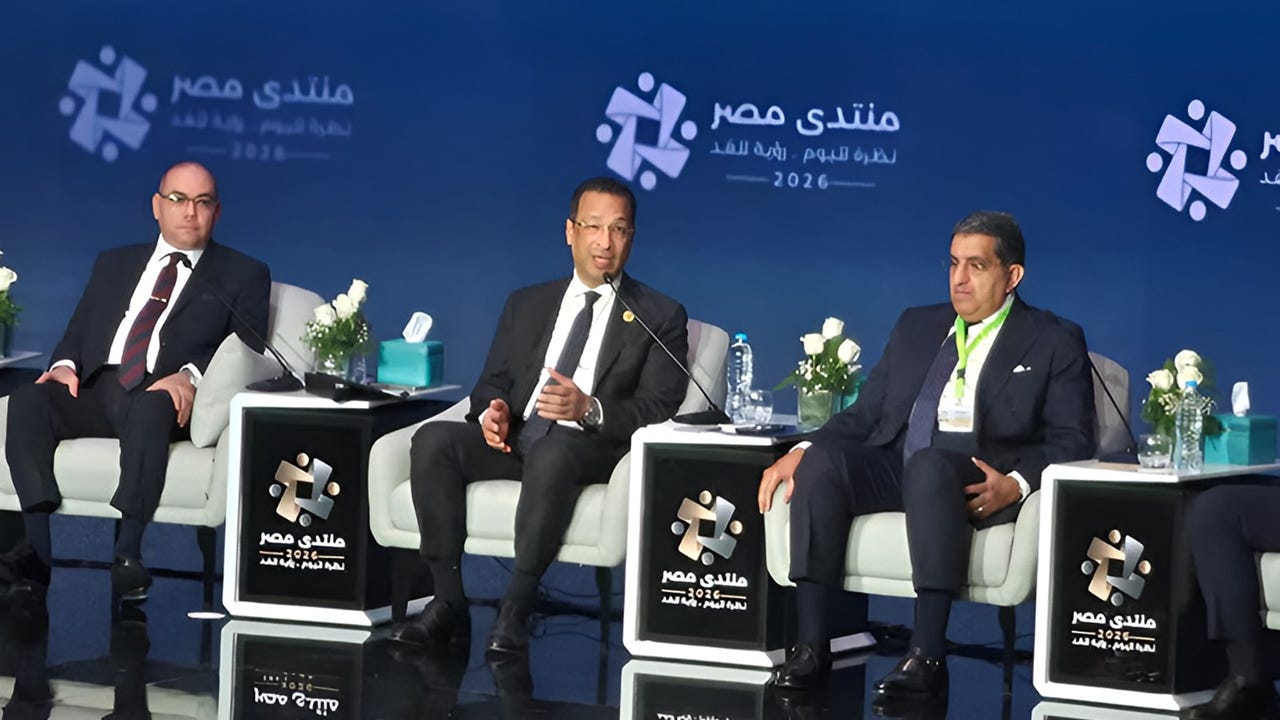
Egypt plans to build five to seven “mega data centres” over the next four to five years and expects some to begin exporting services globally by 2030, Communications and Information Technology Minister Raafat Hendy told Egypt Forum 2026.
No capacity, cost or site details were given. Some facilities are expected to be operational and exporting by 2030, with work continuing on the rest.
Sovereignty without decoupling
Hendy framed the data centres as a sovereignty project, one of five pillars that also include sovereign infrastructure, cybersecurity, AI and data protection, alongside training national talent in advanced technology and quantum computing.
But he said absolute digital sovereignty is an unrealistic benchmark for any country. Egypt will pursue it through international engagement under established frameworks, regulations and standards, rather than by cutting itself off from the global ecosystem — a position that leaves room for foreign partners and investors.
The 2030 targets
The data centre plan sits within the government’s Digital Egypt goals for 2030: ICT contributing 8% of GDP, $12 billion a year in digital exports, 200,000 new jobs and 250 startups building AI applications.
Other targets include 5G coverage in every governorate, 400 services on the Digital Egypt platform (up from about 250 today) with 30 to 35 million users, and capacity to manufacture 30 million mobile phones.
Cables and fibre underneath
Government and private investment in telecom infrastructure has exceeded EGP 600 billion (about $11 billion) over the past decade, Hendy said. Around 5.5 million fibre lines are in place, with a million more targeted each year and fibre expected to reach more than 55% of households by 2030.
Ten submarine cables have been installed over the past ten years and six more are under construction. Hendy said expanded landing stations and routes make Egypt a leading hub for international telecom infrastructure — the basis for its export ambitions.
The gap the plan targets
Egypt’s National AI Strategy for 2025–2030 names fair access to compute, storage and networking as a key enabler, but does not set out how the country will build that capacity. It flags the absence of a major hyperscaler presence as a real obstacle: data locality rules prevent Egyptian organisations from moving workloads abroad, leaving them without the continuously updated AI services hyperscalers offer, or facing costly on-premise deployments that quickly fall behind.
The ministries of electricity, communications and investment are developing an integrated data centre build-out strategy.