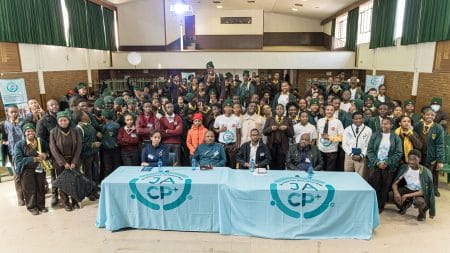
The GSMA and the governments of Benin, Kenya, Namibia, Nigeria and Togo have launched ATLAS Umoja AI, a pan-African initiative to build AI models that understand and operate in African languages — scaling the template Nigeria established with its own state-backed N-ATLAS model to a five-country coalition with continental ambitions.
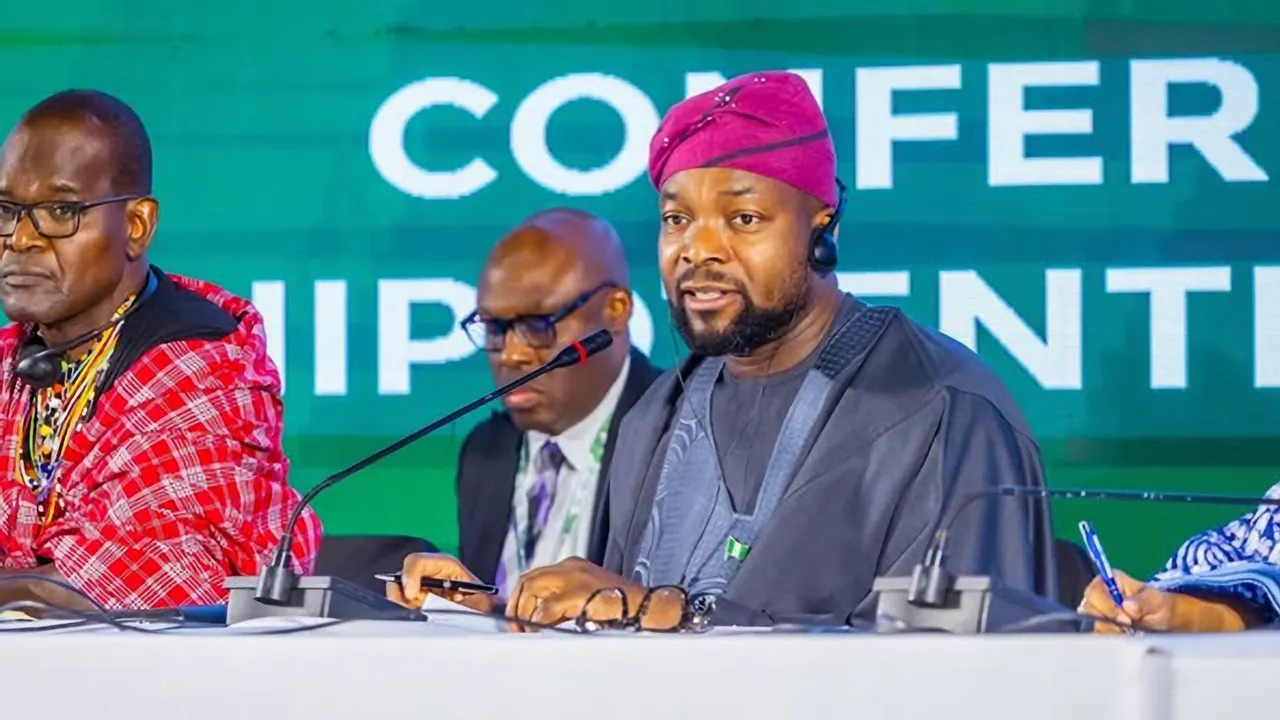
The launch came at the African Telecommunications Union Conference of Plenipotentiaries in Abuja, hosted by the Nigerian Communications Commission, alongside the adoption of the Abuja Ministerial Declaration on Meaningful Connectivity — which commits signatory governments to modernizing technology regulation and expanding infrastructure.
The scale of the problem the initiative is addressing is stark. Nigeria’s Minister of Communications, Innovation and Digital Economy, Bosun Tijani, told the conference that fewer than 2% of Africa’s languages currently receive meaningful support from modern AI platforms. Africa is home to more than 2,000 distinct languages — over 30% of the world’s total, on the GSMA’s own accounting — yet large language models remain trained overwhelmingly on English, French, Spanish and other high-resource languages. Only one African country currently operates a live national sovereign AI model.
ATLAS Umoja is designed to pool regional datasets and research to develop scalable AI systems capable of operating in African languages, complementing rather than replacing existing national AI programmes. Private-sector partners Awarri, Zindi, Pawa AI and Mozisha will engage local developers and data scientists to help build the foundational models — with Awarri already the technical partner behind Nigeria’s N-ATLAS and Zindi bringing one of the continent’s largest data science communities.
Angela Wamola, Head of Africa at the GSMA, framed the initiative as targeting two of the biggest structural barriers to internet adoption on the continent: digital illiteracy and the shortage of locally relevant content. That framing sits squarely inside the commercial logic the GSMA laid out in its June AI report, which argued that African-language AI enables voice-based interfaces capable of extending digital services to users who aren’t literate in English or French — expanding the addressable market for AI products and preventing AI’s benefits from concentrating among a linguistically privileged minority.
The technical foundation is N-ATLAS, the open-source multilingual and multimodal large language model Nigeria unveiled in September 2025 supporting Yoruba, Hausa, Igbo and Nigerian-accented English, including language-specific automatic speech recognition. Tijani announced it during the 80th United Nations General Assembly and Nigeria open-sourced it deliberately — inviting researchers and communities elsewhere on the continent to build on it. Nigeria, home to more than 500 languages, framed the model as a national commitment to unity and inclusion as much as a technical artifact. ATLAS Umoja is the mechanism for scaling that invitation into a working multi-country programme.
The Nigerian precedent also supplies the initiative’s strongest supporting argument. Since N-ATLAS launched, developers have moved quickly to build on top of it — a pattern visible in the wider Nigerian language-AI ecosystem, from Cencori and Spitch’s recent integration bringing Yoruba, Hausa, Igbo and Amharic voice AI into a single developer API, to the growing set of tools targeting education, governance, health and commerce use cases in local languages. The practical case ATLAS Umoja makes is that once a credible local-language model exists, developers build things people actually need.
The initiative also draws directly on Africa’s newly expanded seat at the global AI governance table. Ministers from Nigeria, Namibia and Togo — Tijani, Namibia’s Emma Theofelus and Togo’s Cina Lawson, all of whom sit on the recently launched AI for Good Global Commission — have committed support for ATLAS Umoja. That gives the initiative political backing from three of the eight Africans on a 44-member global commission co-chaired by Rwandan President Paul Kagame.
NCC Executive Vice-Chairman Aminu Maida used the Abuja conference to call for more systematic cooperation among African telecom regulators ahead of the 2026 ITU Plenipotentiary Conference in Doha, framing the language-AI push and the regulatory coordination agenda as connected priorities.
ATLAS Umoja joins a widening set of efforts attacking the same gap from different angles. The GSMA and French AI research company Pleias released CommonLingua in April — an open-source language identification model covering 61 African languages, addressing the foundational problem that African-language text is routinely mislabeled as English or French by mainstream systems. The G6 group of African mobile operators demonstrated the first open Swahili reasoning model at MWC Barcelona in March. Google’s WAXAL dataset covers 21 sub-Saharan languages; the Gates Foundation-backed African Next Voices dataset recorded 9,000 hours across 18.
What distinguishes ATLAS Umoja is the governmental layer. Where most African language-AI work has been driven by research collectives, startups, operators and foundations, this initiative places five national governments at the centre of a shared model-building programme, with 54 countries named in its eventual scope. Whether that translates into working models across substantially more than the handful of languages currently served — or joins the longer list of well-supported African AI declarations that have not yet produced deployed systems — will depend on execution over the next several years.