Cape Town–based customer service company Cue has raised $5 million in a primary funding round co-led by South African venture capital firm Knife Capital and FAM Investments, and will deploy the capital toward its next generation of autonomous AI agents, international market expansion and deeper investment in voice, security and enterprise integrations.
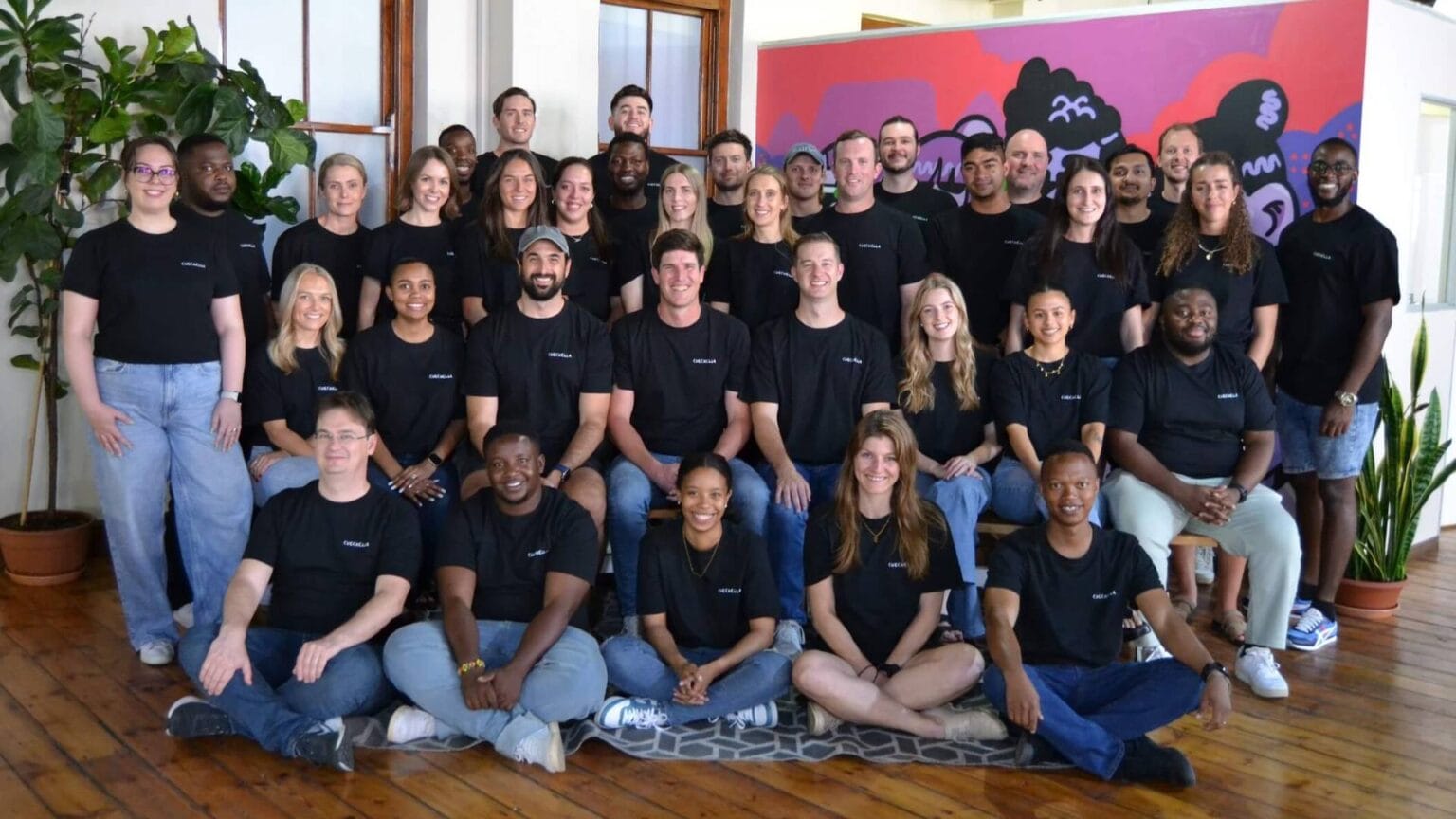
Founded in 2015, Cue is not an early-stage story. The 11-year-old company operates an AI-powered customer service platform whose autonomous agents resolve customer issues end-to-end across WhatsApp, webchat, email, Messenger, USSD, SMS and voice. It says it already powers customer conversations for more than 500 companies across the UK and South Africa, spanning automotive, retail, insurance, finance and education, and has more than 40 staff working remotely across 10 cities in five countries — Lisbon, Johannesburg, Manchester, Bloemfontein, Helsinki, Gqeberha and Delhi among them.
The company grew annual recurring revenue by more than 160% year-on-year in its latest financial year, according to its own figures, and says the platform now handles more than 500 million messages and conversations annually.
Cue said the fresh capital will fund three priorities: engineering its next wave of autonomous AI agents, deeper voice infrastructure and stronger security; scaling sales and marketing across the UK and South Africa as it pushes into new verticals and international markets; and product development spanning more channels, additional agent actions, deeper integrations and advanced analytics.
“Our growth strategy reflects exactly what our clients are asking for: an all-in-one AI-powered customer service platform that delivers value and best-in-class service across every channel,” said Richard Nischk, co-founder and chief executive of Cue.
The round lands as autonomous AI agents move quickly from proof-of-concept to production in customer service — a category where global incumbents including Zendesk, Intercom and Salesforce have been rebuilding around large language models, and where South African peers are increasingly positioning conversational AI as a new front door for commerce. Naspers launched its Zapia consumer assistant and ToqanClaw agentic platform in June, and Nigerian payments company Paystack introduced its AI-agent checkout Index the same month; Woolworths announced its own AI food assistant My Woolies Chef last week. Cue’s pitch differs in that its agents are aimed at enterprise customer service rather than direct-to-consumer commerce, and are designed to work alongside human teams on a single platform.
Keet van Zyl, founding partner at Knife Capital, framed the investment in terms of the human-plus-machine dynamic that has become the industry’s consensus framing on where agentic AI actually creates value.
“Customer service remains the lifeblood of every enduring business,” van Zyl said. “As AI reshapes enterprise software, the winners will be companies that enhance human capability rather than replace it. Cue has built a platform that delivers measurable value today, led by a team with the vision, technical depth and execution ability to be a category leader.”
Cue claims its first-generation agents already resolve more than 60% of customer conversations autonomously. The next iteration is designed to securely execute more complex, cross-system tasks — qualifying leads and adding them to CRMs, checking order status, booking appointments, handling student applications and sending payment links. When a conversation still needs a human, the platform hands it over to Cue’s unified inbox and ticketing desk with full context attached.
Nischk framed the shift as being driven by pressure on both sides of the support relationship. “Rising costs have put support teams under pressure to do more with less,” he said. “At the same time, consumers want self-service but are increasingly frustrated by poor automated experiences. Our goal is to help businesses deliver a genuinely great automated experience, while also recognizing that escalating to a human is often the right thing to do.”
This piece is a rewrite of coverage first published by African-Startups, a sister publication of EU-Startups.