Djibouti used the sidelines of the World Summit on the Information Society in Geneva last week to press its national AI and digital-transformation agenda in talks with the International Telecommunication Union and Smart Africa, part of a broader push to translate the small Horn of Africa nation’s connectivity advantages into an operational AI ecosystem.
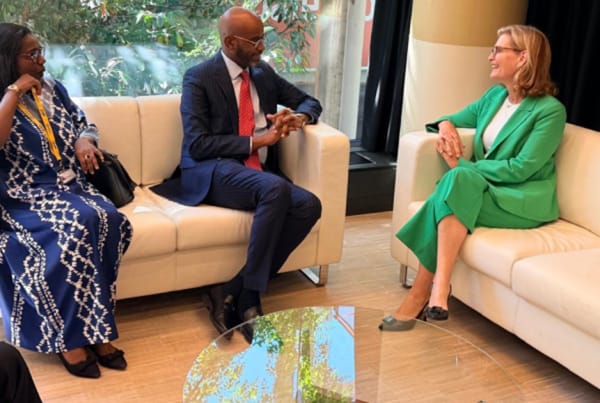
Minister of Communication, Posts and Telecommunications Mohamed Abdoulkader Moussa Helem held a series of meetings on the margins of WSIS 2026, which ran from July 6 to 10. In discussions with ITU Secretary-General Doreen Bogdan-Martin and Telecommunication Development Bureau director Cosmas Zavazava, he focused on international support for the digitalization of public services, digital and AI skills development, and closing the digital divide between urban and rural areas.
A separate meeting with Smart Africa chief executive Lacina Koné centred on aligning Djibouti’s national digital projects with continental initiatives on data sovereignty and AI, including the Djibouti Digital Foundation project and the Eastern Africa Regional Digital Integration Project.
The engagement builds on infrastructure Djibouti has spent the past decade putting in place. The country’s strategic location on the Red Sea has made it a landing point for several international submarine cables linking Africa, the Middle East, Europe and Asia, positioning it as one of the Horn of Africa’s principal internet transit hubs. It also operates three data centres and an Internet Exchange Point.
That infrastructure sits alongside growing usage. According to DataReportal, Djibouti had approximately 772,000 internet users at the end of 2025, representing a 65% penetration rate, with 616,000 active mobile connections — more than 92% of them on mobile broadband networks.
The national AI ecosystem, however, is at an earlier stage. In January 2026, Djibouti’s Ministry Delegate for the Digital Economy and Innovation launched work on the country’s first national AI strategy with support from the United Nations Economic and Social Commission for Western Asia and UNESCO. The roadmap forms part of Vision Djibouti 2035, the government’s long-term plan to transform the country into what officials describe as a “Smart Nation.” Djibouti’s participation in the AI for Good Global Summit, held alongside WSIS 2026, was framed as part of that objective.
Beyond the ITU and Smart Africa engagements, the government said it expects discussions with Chinese authorities to provide additional technical support for deploying AI applications in public services, strengthening domestic capabilities and deepening Djibouti’s participation in regional digital governance initiatives — a channel that reflects the country’s longstanding Chinese-linked infrastructure ties, though the source did not detail the substance of those talks.