African music markets are wrestling with the opportunities and risks of artificial intelligence, from unauthorized AI-generated tracks going viral to weak intellectual property frameworks leaving artists exposed — a tension that took center stage at the Atlantic Music Expo held this month in Cape Verde.
The expo, one of the few African states with a dedicated AI policy, made AI a central theme of its programming. Director Benito Lopes said the discussions were designed to give performers “more knowledge to explore [AI] the best way without losing their human identity and their creativity.”
Cape Verde’s Culture Minister Augusto Jorge de Albuquerque Veiga, who has set a goal of making the island nation a hub of world culture, said adaptation rather than resistance is the only viable path. “You have to work with it, not to be eaten by it,” he told the Guardian. “I think that AI will never cover what’s authentic … AI is the present already, so we have to discuss this and find ways to work with AI for the country, for the culture and for the future.”
The vulnerability of African artists to AI-related exploitation was a recurring concern. Lagos-based entertainment lawyer Oyinkansola Fawehinmi pointed to Nigerian singer-songwriter Fave as a case study in navigating an AI crisis. When an unauthorized version of a track featuring an AI choir went viral last July, Fave recorded her own remix integrating the AI-assisted song and added it to her official discography. “In my view, that was smart and very business aware,” Fawehinmi said. “She essentially reclaimed the ‘AI version’ and released it as her own official expression.”
Many of Africa’s music markets are seen as particularly vulnerable to AI-generated music plagiarism due to comparatively weak intellectual property legal frameworks, a concern that exists alongside broader anxieties about the deepfake market.
Entrepreneurs at the expo were keen to frame AI as a complement to talent rather than a replacement. José Moura, co-founder of Sona, an AI startup that helps artists use text prompts to refine their music, said the technology could empower artists in the Global South to extend their reach without compromising the uniqueness of their sound. “Homogenisation happens when the tool doesn’t know where you’re from,” he said. “Unlike conventional AI that trains on global averages, Sona is built on local music, governed by local artists, so when it amplifies your sound, it amplifies exactly what makes it yours.”
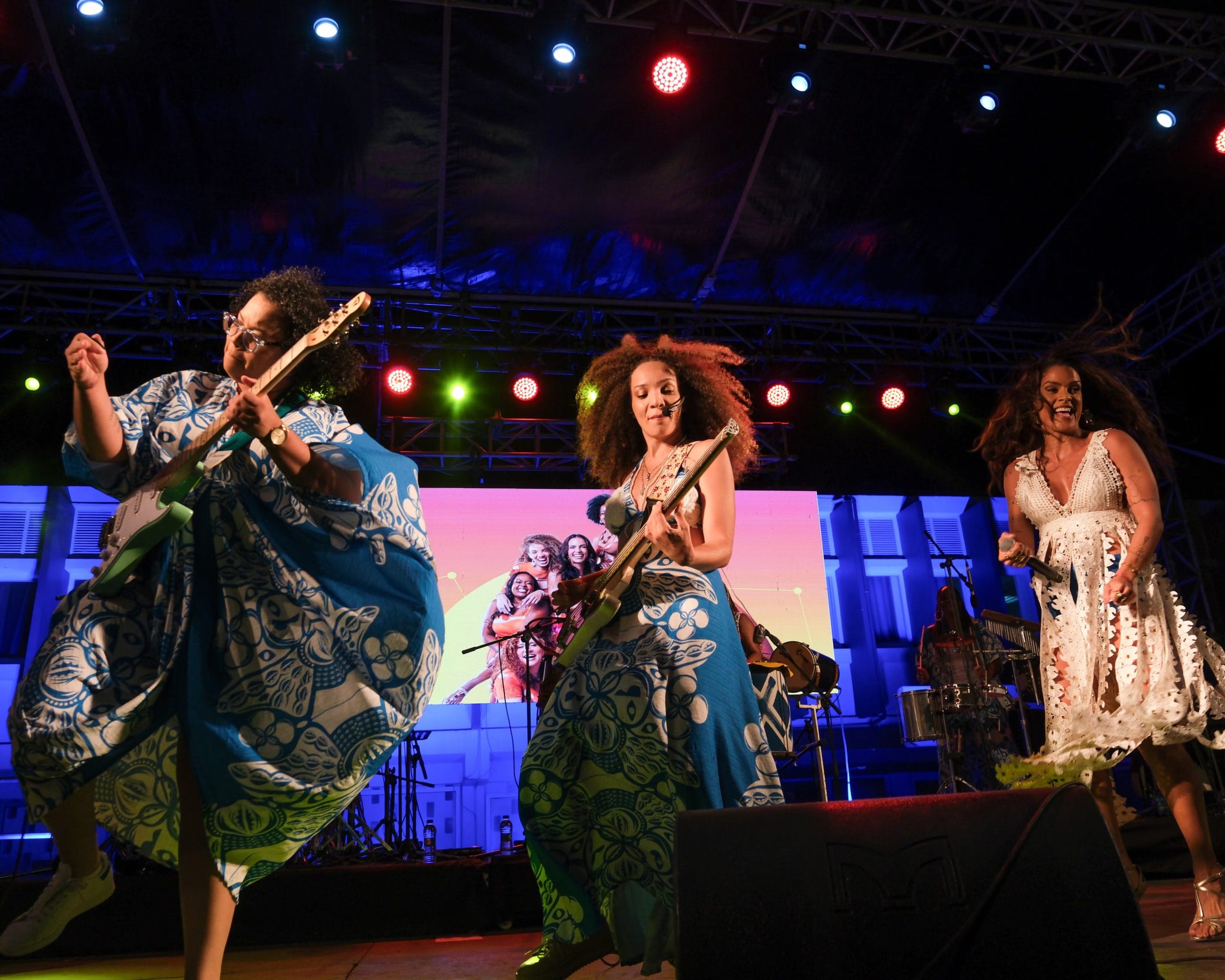
Most delegates highlighted how AI-driven tools for mixing, mastering and data-driven marketing offered indie artists with limited budgets a way to compete globally. Rayra Mayara, a vocalist with Brazilian seven-woman ensemble Sambaiana, which gave its first performance outside Brazil at the expo, said technology could not replicate the emotional power of live performance. “We are seven women and no technology can substitute the feeling we give when we play, sing and talk about our daily lives,” she said. “AI can complement the production process but it is not a substitute to the human.”