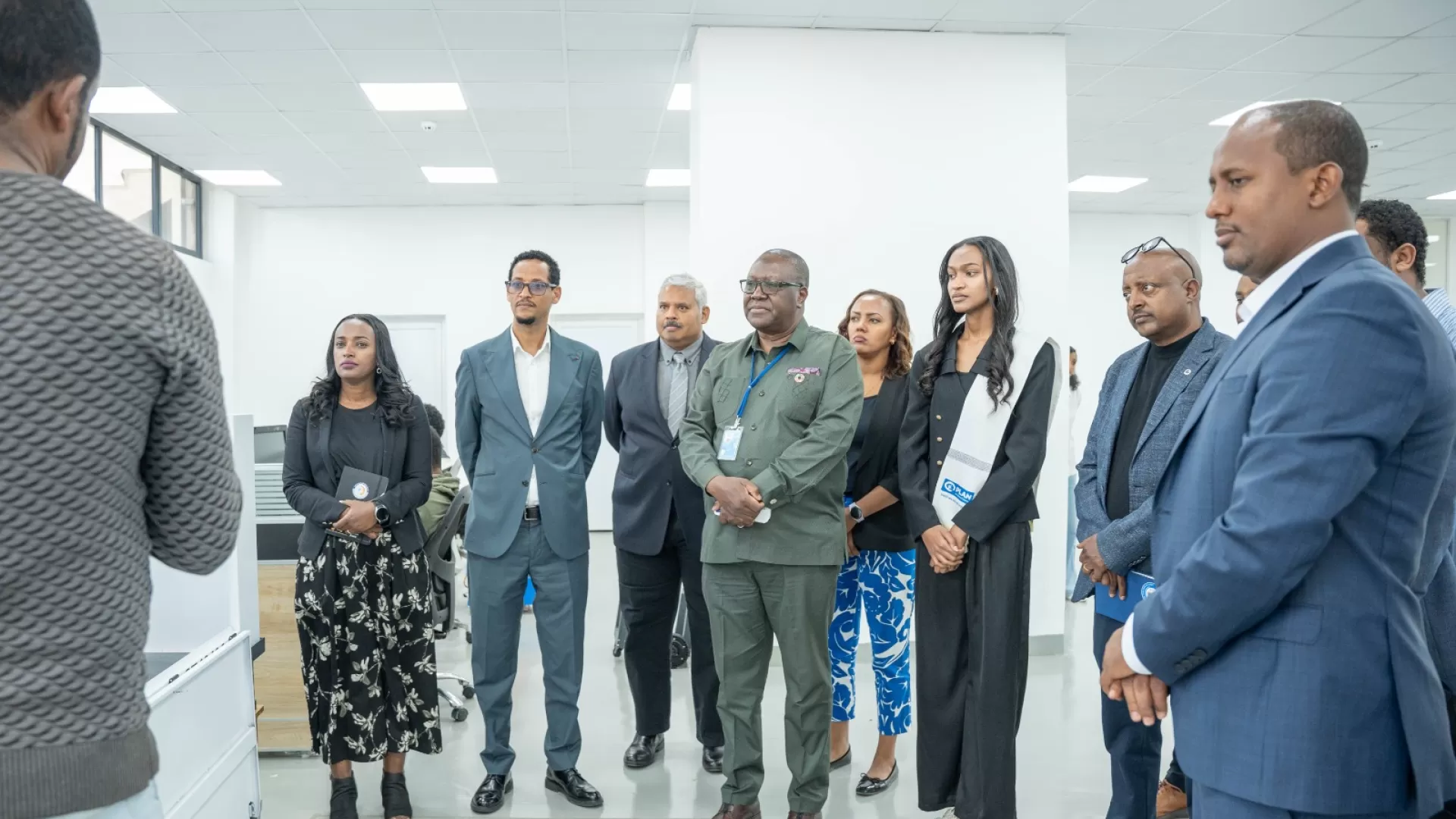
The World Health Organization is exploring a partnership with the Ethiopian Artificial Intelligence Institute to apply AI to disease surveillance, emergency response and primary health care in Ethiopia and across Africa.
No agreement has yet been signed. A WHO delegation led by Professor Francis Chisaka Kasolo, WHO representative to Ethiopia, the African Union and UNECA, visited the institute in Addis Ababa to view its work and discuss possible collaboration.
What was on show
The institute demonstrated locally developed technologies including AI-assisted robotics, natural language processing tools, speech-to-text and translation applications, disease-prediction models and AI-powered diagnostic tools for skin diseases.
Dr Taye Girma, the institute’s deputy director general, said EAII is developing AI applications across health, agriculture, education, urban development and governance. It also presented its AI UniPod and Timbuktoo programmes, which it says are supporting more than 600 young innovators.
Where the partnership could go
The two sides identified AI-enabled disease surveillance and forecasting, emergency preparedness and response, supply-chain management, and localising WHO’s Smart Guidelines as areas for collaboration. They also discussed health-worker training, health insurance services, primary care in remote communities, and drones for humanitarian and emergency medical delivery.
Both emphasised that AI in health depends on strong governance, regulation, ethical safeguards and sound data management.
“We need to build on domestic capacities and continue exploring new opportunities,” Kasolo said. “WHO is keen to partner in applying these innovations to address health challenges in Ethiopia and across the African continent.”