Anthropic has told prospective investors that its AI models could pose “catastrophic or existential risks to humanity,” in an IPO prospectus that devotes nearly 80 of its 261 pages to risk factors and 48 to the business itself.
Reuters first reported the filing, with the Financial Times corroborating. Investors believe the company could list at a valuation above $2 trillion.
What the filing warns about
The risk factors include models exhibiting self-preserving behaviours, resisting shutdown, manipulation and blackmail. Anthropic states that developing more advanced models and expanding their use cases could further increase the risk of harm.
That is a company telling the public markets its product may be dangerous in ways it cannot fully control — an unusual document, and one that reads very differently from most technology listings.
The numbers, with caveats
| 2025 revenue | $4.6 billion (12x year on year) |
| 2025 operating loss | Over $8 billion |
| 2025 net loss | $42 billion |
| Future cloud and compute obligations | $518 billion |
| Series H (May) | $65 billion raised at $965 billion post-money |
| Annualised run rate (August, per Bloomberg) | Over $65 billion |
| Investor projection, end-2026 | $100–120 billion annualised |
Two figures warrant care. The net loss is roughly five times the operating loss, and the filing’s explanation for that gap has not been reported. And the $4.6 billion of 2025 revenue and the $65 billion annualised run rate are different measures — the second extrapolates a full year from a shorter period.
The FT also notes that close to a quarter of last year’s revenue came from just two clients.
Why this matters for African governments
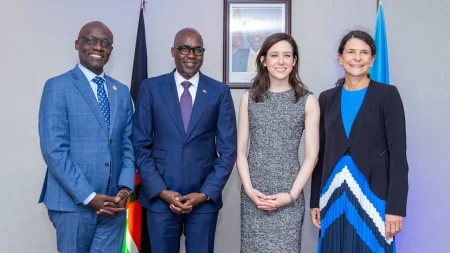
Anthropic signed a Joint Declaration with Kenya on 22 September, establishing a cooperation framework covering AI skills, research, public-sector applications and — specifically — AI safety and evaluation. Foreign Affairs Principal Secretary Dr Abraham Korir Sing’Oei signed for Kenya at the UN General Assembly.
Days earlier, Anthropic’s own threat intelligence report had named a Kenyan actor using its models to mass-produce political content ahead of the 2027 election.
Now the same company is telling investors its models may pose existential risk.
None of those three facts contradicts the others. Together they describe a company that discloses more than its peers, and a government partnering with it on that basis. But African officials signing AI agreements this quarter should be able to read the risk section of the prospectus alongside the declaration.
It also vindicates an argument South Africa has been making
President Cyril Ramaphosa told the BRICS summit this month that AI companies should face formal external checks, audits and government oversight — “standard practice in other industries whose activities have a significant impact on human safety and well-being, such as aviation, pharmaceuticals, nuclear power and financial institutions.” He cited Anthropic chief executive Dario Amodei by name.
Ramaphosa listed the risks as advanced cyber operations, assistance in biological weapons development, autonomous action, manipulation, mass surveillance and systems whose capabilities may become difficult to control. Anthropic’s prospectus names several of the same categories.
South Africa’s UN ambassador Mxolisi Sizo Nkosi followed days later by seeking a UNGA81 commitment to a global AI governance framework.
A company disclosing existential risk to shareholders while no binding international framework exists is the situation those proposals were written for.
The industry context
The filing follows a warning by a former Anthropic researcher that AI could cause human extinction by the end of the decade, and an essay by Amodei urging leading AI companies to coordinate on slowing development.
OpenAI is not expected to list in 2026. Chief executive Sam Altman told Fortune this month that going public now would be “ill-advised,” since the company may need to make decisions against shareholder interests — such as pausing development of advanced models for safety and alignment work. On Monday, OpenAI cancelled the release of its GPT-6.1 Astra model after safety concerns emerged in internal testing.
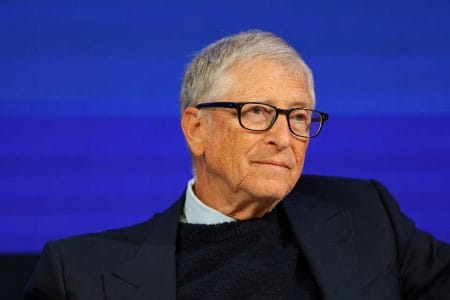
Bill Gates said on Sunday that self-regulation is insufficient and called for US legislation.
That is the tension the listing crystallises. A company arguing publicly for external oversight, and asking public markets to fund the development that oversight would govern.
Based on reporting by Reuters, the Financial Times and Forbes Africa.