Mauritius has launched an AI Adoption, Readiness and Governance Survey to measure how local businesses are actually adopting and managing artificial intelligence — an attempt to put evidence beneath a national AI strategy the island launched three months ago.
The survey is a joint initiative of the Mauritius Chamber of Commerce and Industry, the Outsourcing and Telecommunications Association of Mauritius and the Mauritius Qualifications Authority. It will assess AI adoption levels, organisational readiness and governance practices among local enterprises, and identify the opportunities and obstacles businesses face in deploying the technology. Findings are expected to feed into policy and the country’s digital transformation strategy.
The industry-body composition is notable. Most African AI readiness measurement has come from external indices — Oxford Insights, the Global Index on Responsible AI, Ataraxis — that rank countries on national capacity rather than enterprise practice. A survey run by a chamber of commerce, an outsourcing association and a qualifications authority is aimed at a different question: what firms are doing, whether their staff have the skills, and whether governance is keeping pace with deployment.
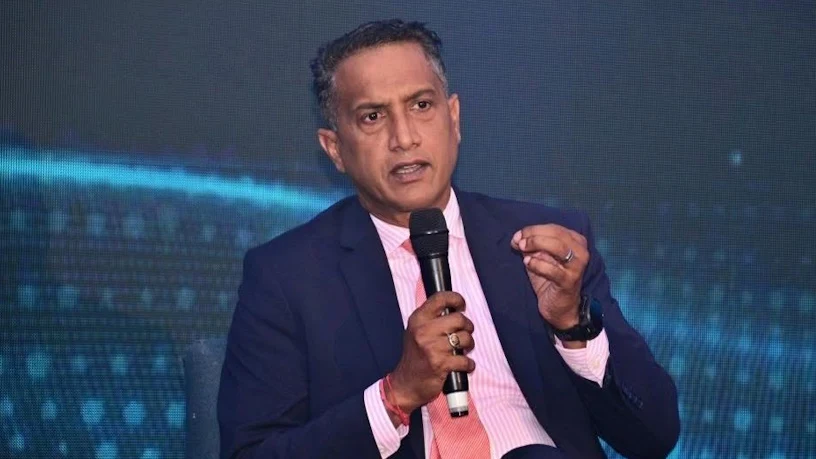
Information Technology, Communication and Innovation Minister Avinash Ramtohul framed the launch in exactly those terms. “Measuring AI adoption is essential to inform policymakers and support the country’s digital transformation,” he said.
Ramtohul set the survey alongside the government’s existing AI architecture — an AI Unit, a National AI Strategy, AI laboratories and training programmes aimed at building citizen AI skills. Mauritius launched its National AI Strategy 2025-2029 in April through the AI Unit with UNDP support, built around four principles the government groups under the acronym FAIR: fairness, accountability, inclusiveness and responsibility. The survey gives that framework a feedback mechanism.
On the governance question, Ramtohul stayed close to the strategy’s framing. “AI should complement human capabilities rather than replace them,” he said, emphasising responsible governance, data protection and ethical use as AI increasingly shapes how businesses operate, improve productivity and deliver services.
The economic stakes are specific. ICT contributes around 5.4% of Mauritian GDP, and Ramtohul said the aim is to lift that to between 10% and 12% — roughly a doubling. The sector has been a consistent pillar of the country’s “Intelligent Island” positioning, employing tens of thousands and anchoring successive budget commitments to AI, 6G and spatial computing.
Mauritius has a longer AI policy record than most African states. It launched the Digital Mauritius 2030 Strategic Plan in 2018 — among the earliest national AI-oriented strategies on the continent — established the Mauritius Artificial Intelligence Council to coordinate adoption, and ranks 13th globally on Oxford Insights’ Responsible Use Sub-Index. On the 2025 Government AI Readiness Index it placed 71st globally and second in sub-Saharan Africa on AI infrastructure with a score of 46.19, behind South Africa’s 55.23.
That record is also why the survey matters more than a typical readiness exercise. Mauritius has strategy, an AI Unit, an ethics framework and infrastructure standing — the policy scaffolding many African countries are still assembling. What has been harder to establish anywhere on the continent is whether that scaffolding translates into enterprise adoption. Many African markets remain at an early stage of AI deployment, and readiness assessments are increasingly treated as tools to direct investment and policy rather than to demonstrate progress.
If the survey produces adoption and governance data granular enough to act on, it would give Mauritius something few African countries currently have: a measured baseline against which to judge whether a national AI strategy is changing what businesses actually do.