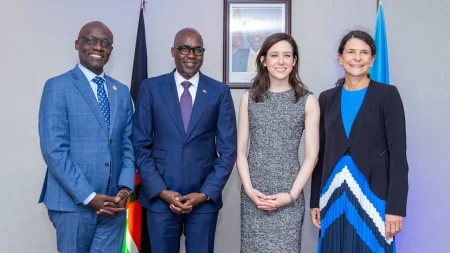
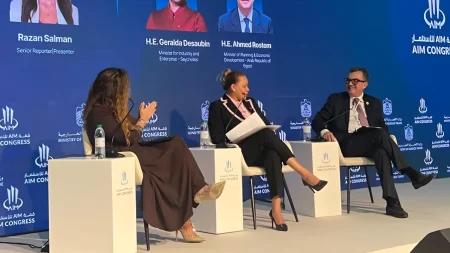
The next phase of AI should be shaped with Africa, not simply about or for the continent, according to Sunil Geness, SAP’s director of global government affairs and corporate social responsibility for Africa.
His comments follow the launch of the AI for Good Global Commission, announced this week by international leaders to expand access to AI, strengthen trust and increase its social and economic impact. The commission brings together representatives from governments, businesses and international organizations to identify practical ways to unlock AI’s potential while promoting equitable access. Its inaugural meeting will take place during the International Telecommunication Union’s AI for Good Global Summit, held July 7-10 in Geneva. The summit is part of Digital Week, running July 6-10, alongside the first U.N.-mandated Global Dialogue on AI Governance and the WSIS Forum 2026.
Geness, who will take part in the summit, said Africa should approach global AI governance with a clear agenda built on economic growth and inclusion.
“Africa must meet that room with clarity, not caution. Our agenda should be simple and bold: AI governance that expands prosperity,” he said. “That means compute access, skills investment, trusted data systems, open standards, local-language innovation, accountable public procurement, and regulation that protects people without suffocating entrepreneurs.”
He said the priority is turning the African Union’s Continental AI Strategy from a document into national roadmaps, investment pipelines and regional cooperation. “This is technology diplomacy: 54 nations aligning where they can, rather than negotiating as 54 separate voices. This is where I hope to add value.”
Africa’s representation on the commission has been strengthened by the appointment of Rwandan President Paul Kagame as co-chair, alongside Salesforce Chair and CEO Marc Benioff.
The ITU said the commission aims to promote equitable access to AI and help narrow the global digital divide. An estimated 2.2 billion people remain offline, it said, leaving around a quarter of the world’s population excluded from AI-driven opportunities. “A key focus of the AI for Good Global Commission will be to bridge digital divides and help ensure that AI becomes a tool for solving global challenges, not deepening inequalities,” the organization said.
Kagame said technology should reduce inequality and broaden access to AI’s benefits. “Technology is supposed to be a force for good, and we have a responsibility to use it accordingly,” he said. “Let us work together to reduce inequality and allow more of our citizens to benefit from the good AI can deliver to all of us.”
Benioff said AI’s economic potential depends on maintaining public trust. “The promise of AI is built not only on incredible opportunities for economic growth, but on the foundation of trust required for our shared success,” he said.
ITU Secretary-General Doreen Bogdan-Martin, vice chair of the commission, said cross-sector collaboration would be essential. “No organisation can single-handedly put AI at the service of all humanity,” she said. “It will take collective leadership and the combined expertise of partners across sectors to ensure AI benefits everyone, everywhere.”
This article first appeared here: Africa must help shape global artificial intelligence governance