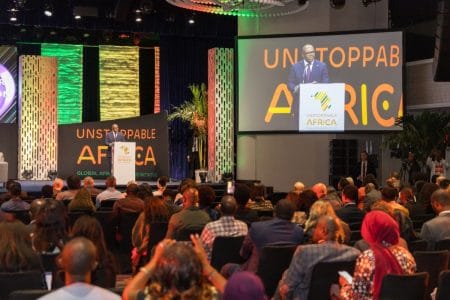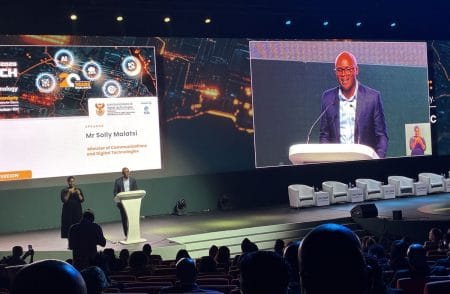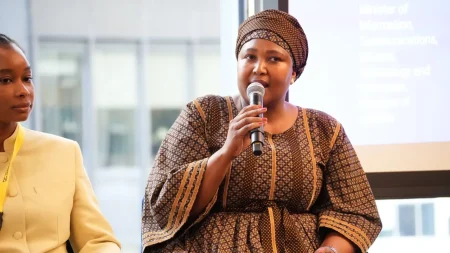
Kenya has signed a Joint Declaration with US AI company Anthropic establishing a cooperation framework on responsible AI, research and applications aligned to national priorities — a fortnight after the same company named a Kenyan actor in its global threat intelligence report.
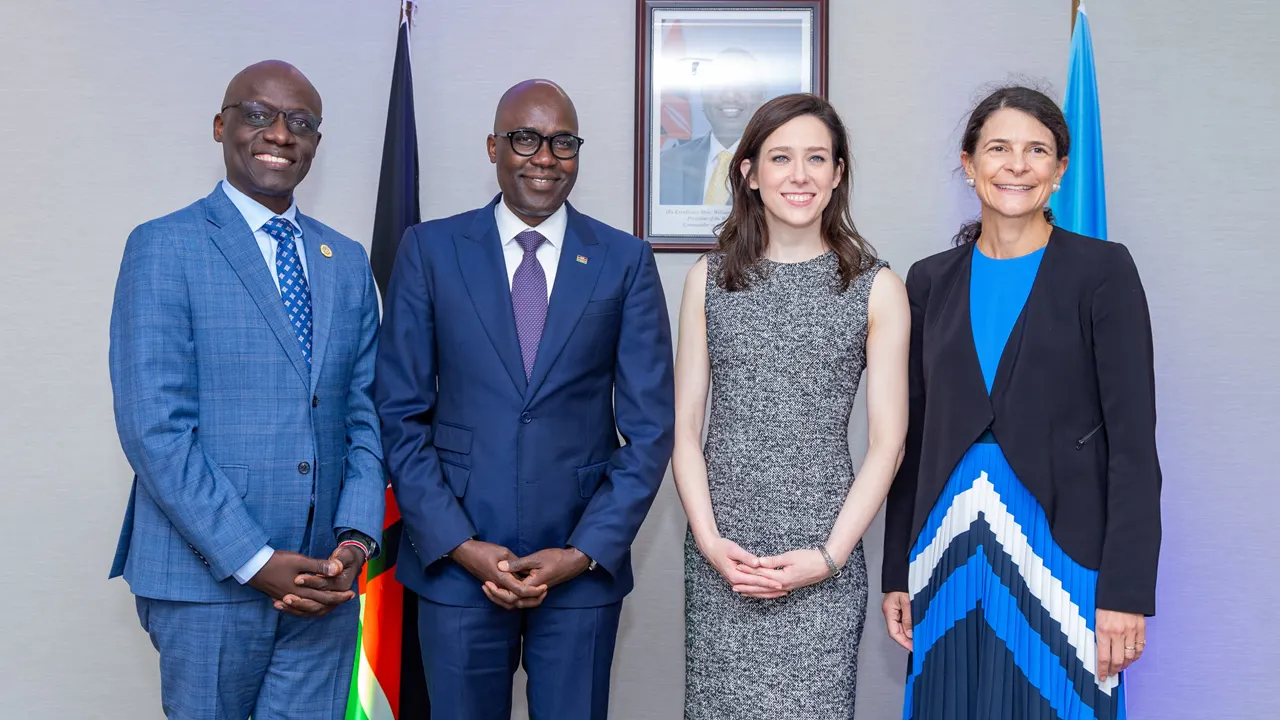
The declaration was signed on 22 September on the margins of the UN General Assembly in New York. Foreign Affairs Principal Secretary Dr Abraham Korir Sing’Oei signed for Kenya; Elizabeth Kelly, Anthropic’s Head of Beneficial Deployments, signed for the company. Anthropic Global Impact Lead Ambassador Courtney O’Donnell and Kenya’s Special Envoy on Technology Ambassador Philip Thigo witnessed.
What it covers
Four core areas: AI skills and capacity building, research, responsible public-sector applications, and AI safety and evaluation — plus locally relevant applications in education and health.
Thigo said the partnership would help Kenya build local AI expertise and develop technologies suited to its needs while protecting data sovereignty.
No funding, compute allocation, tools or timeline has been announced. The declaration provides for future pilots, training programmes and research involving Kenyan institutions.
The fortnight in between
On 22 September, Kenya signed a responsible AI framework with Anthropic. Days earlier, Anthropic had published Detecting and Countering Misuse of AI: September 2026, which identified a Kenyan actor using Claude to generate batches of 50 political posts at a time, instructed to appear organic, ahead of the 2027 general election.
The content praised Energy Cabinet Secretary James Opiyo Wandayi for halting a Kenya Power tariff increase and pushed claims that the United Opposition coalition was fracturing. Anthropic found no evidence of government involvement, assessed the operation as domestic, and rated it Category One on its own Breakout Scale — the lowest tier — saying it did not reach genuine users.
The two events are not in conflict, and may be connected. A company that detects and publicly discloses misuse of its own product in a country is demonstrating exactly the safety and evaluation capability the declaration commits to co-develop. Both facts belong in the same frame.
Months of groundwork
The agreement follows sustained engagement rather than a summit handshake.
Thigo opened discussions with Anthropic in June 2026, followed by a Silicon Valley meeting with chief executive Dario Amodei. On 3 September, ICT and Digital Economy Principal Secretary John Tanui met an Anthropic delegation led by O’Donnell to discuss AI skills for public servants and SMEs, cybersecurity and potential pilots.
That sequence suggests a negotiated document rather than a ceremonial one — though what it produces remains to be seen.
Foreign Affairs, again
The signatory matters. Kenya’s AI partnerships are being executed through the Foreign Ministry rather than the ICT ministry.
Prime Cabinet Secretary and Foreign Affairs Cabinet Secretary Musalia Mudavadi signed a five-year framework with Stanford’s Hoover Institution at the same General Assembly, covering data, AI and policy analytics. Mudavadi’s ministry also anchored the Kenya-France Africa Forward AI clusters programme. Thigo holds the title Special Envoy on Technology.
Kenya is treating AI capability as a diplomatic asset, not a procurement question.
The partner list
Anthropic joins a lengthening roster. President William Ruto discussed East Africa’s first OpenAI Academy with Sam Altman in June. Qhala partnered with Mistral AI and French Tech Nairobi in July on an accelerator for education, healthcare and agriculture startups. Google ran Gemini workshops in Nairobi in September and extended free AI Plus subscriptions across 27 African countries. AWS signed with Konza’s Technopolis Authority in August.
Kenya has engaged OpenAI, Anthropic, Google, Microsoft, Meta, NVIDIA, Mistral and Cohere within months.
That breadth is deliberate — the same multi-partner posture Egypt has adopted — and it supports the stated ambition of being a producer of AI talent rather than a market for AI products.
The governance gap it lands in
The declaration supports implementation of the Kenya AI Strategy 2025-2030. The country’s draft AI policy remains in public consultation and an AI Bill is before Parliament. The draft proposes a Kenya AI Safety Institute for testing and risk classification.
An agreement whose fourth pillar is AI safety and evaluation would, in a completed framework, sit under that institute. It does not exist yet, which means the safety component currently runs through a bilateral arrangement with a company rather than a national body.
That is a reasonable interim position. It is also the kind of arrangement a Safety Institute would eventually be constituted to supervise.