Kigali-based startup Entelon is building AI products and custom systems to replace the slow, manual processes many African organisations still rely on. These include paper forms, hand grading, data entry and phone calls that are never analysed.
Alain Barsime Shema and Don Durkheim founded the company in August 2025. Entelon has since built products across health, research, education, customer experience and travel, alongside custom AI systems for individual clients. Those systems include voice agents, team-specific AI agents, workflow automation and data analysis.
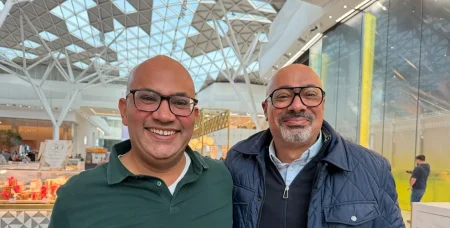
Durkheim is the company’s co-founder and president. He said global AI tools assume organisations already run on clean digital systems, which most African institutions don’t. Many still work across paper, spreadsheets and several languages, so those tools are never adopted. Entelon starts from where organisations actually are, he said, building around the languages, tools and infrastructure they already use.
Its health product, Mamora AI, was built for HDI Rwanda. Through the platform, residents report symptoms and conditions in their communities to help detect disease outbreaks early.
Visko, its research tool, turns an existing questionnaire into a live digital survey. The questionnaire can be a PDF, a Word file or a photo of a paper form. During interviews, Visko transcribes answers and fills in the form automatically. “The interview ends, and the clean dataset already exists,” Durkheim said.
In education, Klok AI reads students’ handwritten exam answers and suggests marks step by step, with the teacher keeping control of every grade. Phibram listens to every call in a call centre and builds a continuous picture of service quality. HeyRwanda is a companion app for visitors, covering discovery, navigation, voice translation and payments.
Where existing tools fall short, Entelon does its own research. The company trained its own text-to-speech model on about 500 hours of Kinyarwanda audio and is co-developing a Kinyarwanda large language model. Durkheim said the aim is for its voice products to work for people that global tools don’t serve.
He pointed to concrete demand. Rwanda’s central bank requires regulated financial institutions to run customer satisfaction surveys, and banks need a way to hear what customers say on the phone. He added that research teams spend weeks building digital forms by hand and teachers spend nights grading.
Entelon is bootstrapped and funded by revenue from product contracts and custom AI work. According to Durkheim, its products and systems handle more than 1,000 AI interactions a day. He said Mamora AI reaches more than 500 users through over 30 community health workers, who have filed more than 1,200 reports since launch.
Visko is in commercial use by research organisations and NGOs for market research. Klok AI and Phibram are in talks with institutional buyers in education and banking.
The company earns revenue in two ways. Organisations pay it to build and maintain voice agents, AI agents and automation. Its products are sold separately: Visko charges per questionnaire, per project or through enterprise contracts, and Phibram is billed on usage credits.
For now, Entelon is focused on Rwanda. Durkheim described the country as small enough to reach decision-makers directly and digital-first enough that institutions are actively looking for better tools. East Africa is next, he said, with each product entering a new market once it secures a first anchor customer there.
Originally published by Disrupt Africa.