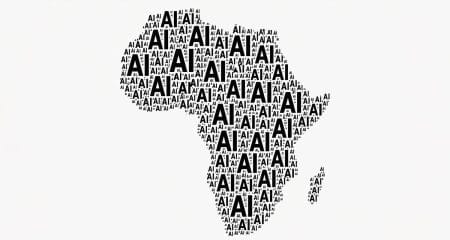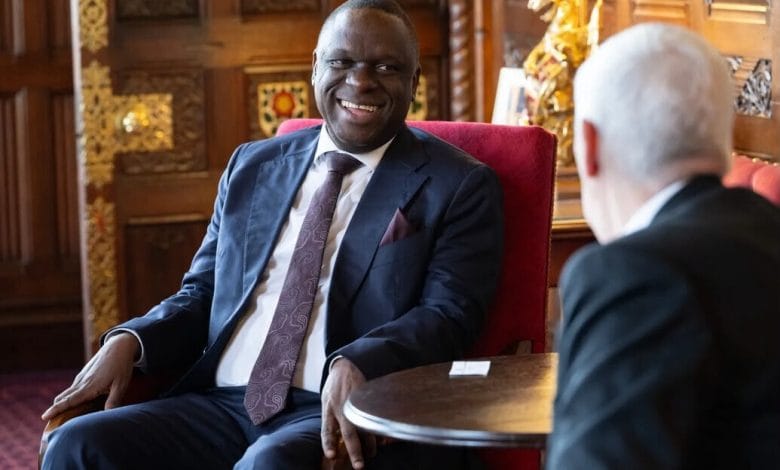
Africa must move beyond being merely a consumer of artificial intelligence and instead become an active global force in creating, shaping and governing the technology, Tanzania’s High Commissioner to the United Kingdom, Ambassador Mbelwa Kairuki, has argued.
Delivering the keynote address at Hack the Law 2026, hosted by the King’s Entrepreneurship Lab at the University of Cambridge, Kairuki told more than 200 participants representing over 60 institutions from 24 countries that the AI revolution represents far more than a technological development — it is a leadership challenge that will determine how societies manage a future where machines increasingly influence human decisions.
“Our generation is the first in history capable of creating machines that can reason, learn and increasingly influence human decisions,” Kairuki said. Future generations, he explained, would remember this century not only because AI was invented, but because humanity was forced to confront whether human wisdom would remain capable of governing intelligence in an age when intelligence was no longer exclusively human. “This is not primarily a technological question. It is a leadership question,” he added.
The ambassador urged African governments, universities and businesses to reject the belief that innovation belongs only to a small group of advanced economies. “The next great idea can emerge from Dar es Salaam as readily as from Silicon Valley, Nairobi, London or Cambridge,” he said. “History has never rewarded those who waited for the future. It has always rewarded those who helped create it.”
Kairuki said Africa’s ambition should extend beyond digital inclusion toward digital leadership — strengthening scientific research, expanding digital infrastructure, supporting universities, encouraging entrepreneurship and developing human talent. He described talent as the most valuable strategic resource of the modern era. “The most valuable strategic resource of the 21st century is no longer land, oil or even capital. It is talent. Countries that cultivate talent will shape the future, while those that neglect it will consume the future created by others,” he said.
Drawing on Tanzania’s experience, Kairuki said the country views AI not as an end in itself but as a practical tool for national transformation. He highlighted emerging applications in public services, particularly the justice sector, where advanced transcription, translation and electronic case management systems are being used to reduce administrative burdens and free judicial officers to focus on legal reasoning. “Artificial intelligence should not replace judges. It should enable judges to become even better judges. Technology should amplify human judgment, not substitute it,” he said.
He also highlighted Tanzania’s initiative to develop a Kiswahili Large Language Model, describing it as a significant step toward ensuring African languages have a meaningful place in the digital age. “It is a statement of national confidence,” he said. “It recognises that African languages deserve a place in the digital future. Language is not merely a means of communication, it carries identity, culture and civilisation.” Excluding African languages from AI systems, he warned, could leave the continent disadvantaged in the emerging digital economy. “When we invest in Kiswahili artificial intelligence, we are not simply writing code. We are preserving culture, expanding opportunity and upholding that every civilisation has the right not only to use technology, but to shape it.”
Addressing legal professionals and students, Kairuki rejected predictions that AI would replace lawyers, instead encouraging the legal sector to combine traditional expertise with knowledge of emerging fields such as algorithms, cybersecurity, digital governance and electronic evidence. Universities, he said, have a crucial responsibility to prepare graduates who are technically competent, ethically grounded and capable of working across disciplines. “The future belongs to those who can bring technology, law, ethics and public policy together in pursuit of the common good,” he said.
But technological progress must be matched by effective governance, he cautioned — innovation should never move faster than society’s ability to regulate, monitor and ensure accountability. “Artificial intelligence can process information and recommend decisions, but it cannot accept responsibility. That responsibility will always remain ours.”
Kairuki argued that AI has become a strategic national issue extending beyond traditional technology institutions, with finance ministers, defence leaders, chief justices and healthcare authorities increasingly involved in shaping AI policies. He challenged Africa to recognize the historic opportunity before it. “Africa must not merely participate in the AI revolution. It must help lead it,” he declared. “The continent is home to the world’s youngest population, extraordinary entrepreneurial energy and unmatched linguistic and cultural diversity. These are not constraints — they are strategic assets.”
He concluded by urging students, innovators and future leaders to ensure technology remains a tool for improving human life rather than replacing human values. “Never allow technology to diminish humanity. Never allow efficiency to replace justice. Never allow innovation to outrun wisdom,” he said. “Our generation has been entrusted with shaping the future. Let it be remembered as the generation that advanced technology without compromising human dignity.”