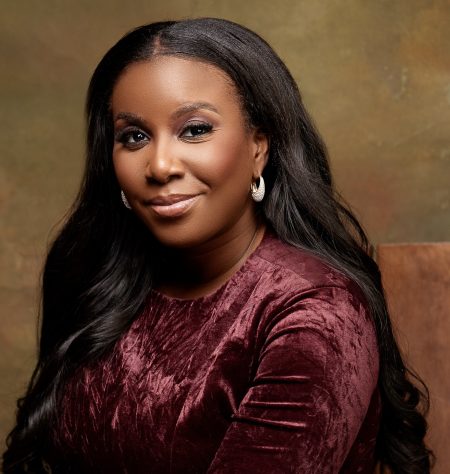
Letlhokwa Mpedi is principal and vice-chancellor at the University of Johannesburg. Thebe Ikalafeng is chancellor of Sol Plaatje University and professor of practice at the University of Johannesburg Business School.
They recently published an opinion article that first appeared in the Business Day on 12 June 2026.
The battle for Africa’s rights, image and wealth
In 1983 Thomas Sankara, the revolutionary president of Burkina Faso, drew a direct line between food and power. “Imperialism,” he told his people, “occurs not only in the brutal form of those who come with guns to conquer territory. It occurs in more subtle forms: a loan, food aid, blackmail.” Then he landed the verdict, speaking about grain, aid and foreign debt: “He who feeds you controls you”
Sankara was assassinated on October 15 1987, before the World Wide Web was invented in 1989, before Google launched in 1998, before the smartphone arrived with the iPhone in 2007, and long before artificial intelligence (AI) became a governing force in daily life. He can’t have imagined the world we now inhabit. Yet his logic holds with a precision that should unsettle every African leader sitting at a technology summit today.
AI systems are, at their core, mirrors. They reflect the world as it was fed to them. If the data feeding the world’s largest learning models, including its images, literature and cultural assumptions, is predominantly Western, Africa is again allowing someone else’s mirror to define our reflection. The danger is not only misrepresentation; it is that misrepresentation can become authoritative, generated at a volume and velocity no human counter-narrative can match.
Ethiopian-Irish AI researcher Abeba Birhane has published work demonstrating large image datasets contain deeply racialised and sexualised associations with Africans. This is not a bug. It reflects what was in the training data. A 2020 Africa No Filter study found 63% of journalists who write about Africa have no correspondents on the continent. The distorted archive precedes the distorted algorithm. The model learnt the world’s biases at an industrial scale and feeds them back to us as fact.
This is extraction and is the same logic that has governed Africa’s relationship with the global economy for centuries. In the AI age the raw material is our culture: our music, fashion, stories and our 2,000 languages. Amapiano is being taught by Korean instructors. Fela Kuti’s sound is being algorithmically replicated. Ghanaian Kente cloth and East African Maasai fabric patterns are being reproduced by factories in China. South African designer Laduma Ngxokolo’s Xhosa-inspired MaXhosa knitwear has been replicated by AI image generators without attribution or compensation.
The legal precedents are instructive. After a protracted international legal battle, South Africa eventually secured a geographical indication (GI) for rooibos, the legal instrument that protects a product’s provenance. The intellectual property law is territorial and it does not matter who originated the idea. It matters who registered it first. But with GI indigenous knowledge systems and ideas are protected. At a minimum, Africa needs the AI equivalent of GI legal frameworks that protect cultural provenance before it is absorbed, rendered generic and monetised elsewhere.
Africa is home to 17% of the world’s population but accounts for only 1.5% of the global creative economy and 2.9% of global creative exports, in a sector valued at more than $2.25-trillion. According to a recent study by the UN Development Programme, Nollywood produces more than 2,500 films a year and is the world’s second-largest film industry by volume. Afrobeats is the world’s most-streamed genre. The continent’s creative output is dominant; its share of the value that output generates is not.
The Hollywood Writers Guild went on strike in 2023, partly to prevent AI from being trained on their work without compensation. African collecting societies – Samro in South Africa and Coson in Nigeria – have no equivalent action underway, despite African music sitting in every major training dataset. The extraction is happening, but the legal response has not yet started.
Principal architect
Africa carries none of the legacy infrastructure that has slowed the rest of the world. M-Pesa did not adapt a Western financial product; it built something structurally new for local conditions.
The EU went first with its AI Act and has been criticised as innovation hostile. The US is finding its footing. Africa, with the AU’s Data Policy Framework in place, has a genuine window to write rules that are protective and generative, ensuring originators share in the value they create, that indigenous knowledge is treated as sovereign, and that AI built on continental data serves Africa.
The African Continental Free Trade Agreement (AfFTA), spanning 54 nations, 1.4-billion people and a combined GDP of $3.4-trillion gives Africa a collective negotiating position it has not had before. A joint AfCFTA position on AI training data requirements would be one of the most consequential acts of digital sovereignty yet this continent has undertaken.
In the 19th century the Berlin conference in 1884 made decisions about Africa without Africa at the table. We cannot afford a 21st-century digital Berlin Conference.
Language most urgent
Africa is the most linguistically diverse continent on Earth, yet AI reaches our people primarily in English, French and Portuguese, the languages of colonisation. Of the continent’s 2,000 languages, GPT-4 performs reliably in about 26. Language is not only communication; it is cognition.
The way Zulu encodes time, Yoruba encodes social hierarchy and Setswana encodes communal obligation – these are not translation problems. They are different epistemologies. An AI that can only think in non-African languages will not serve an African economy. The solution is to code, write and publish in our own languages; to feed the system ourselves.
Rwanda and Kenya are attracting AI developers precisely because they offer what Silicon Valley cannot: a blank canvas and a willingness to write new rules. Masakhane and Lelapa Al are building African language AI datasets. This is the leapfrog logic that defined Africa’s most successful technology stories. It applies equally to AI governance.
About 70% of Africa’s population is under 30 – innovative, hungry and unburdened by the constraints of older economies. The 2025 Brand Africa research reveals a defining paradox: 80% of Africans say they are proud to be African, yet only 15% choose to buy African.
The next battle will not only be for their hearts and wallets. It will be for their rights, their image and ultimately their wealth. The quasidemocratisation of creative tools in the intelligent age makes it easier than before to appropriate Africa’s cultural output without consent, attribution or compensation. AI, branding and the law have converged into a single contested frontier.
AfCFTA gives us the economic architecture. African data sovereignty gives us the raw material. African cultural distinction gives us a voice.
The question is whether we build all three fast enough and together.
While Sankara’s “he who feeds you controls you” warning was about grain, it is equally true about data, culture and code. It is time Africans fed themselves.
*The views expressed in this article are that of the author/s and do not necessarily reflect that of the University of Johannesburg.